


Roof Replacement Covered by Insurance roof replacement covered by insurance 2026
When a nasty Texas storm rolls through, the first question every homeowner asks is, "Will my insurance actually pay for a new roof?" For most people in Dallas-Fort Worth and East Texas, the answer is a qualified yes. If the damage came from a sudden event like a hailstorm or high winds—and not just old age—you're likely covered.
How much you'll actually get, though, depends on your specific policy and the kind of damage your roof sustained.
Will Insurance Pay for a New Roof After a Storm
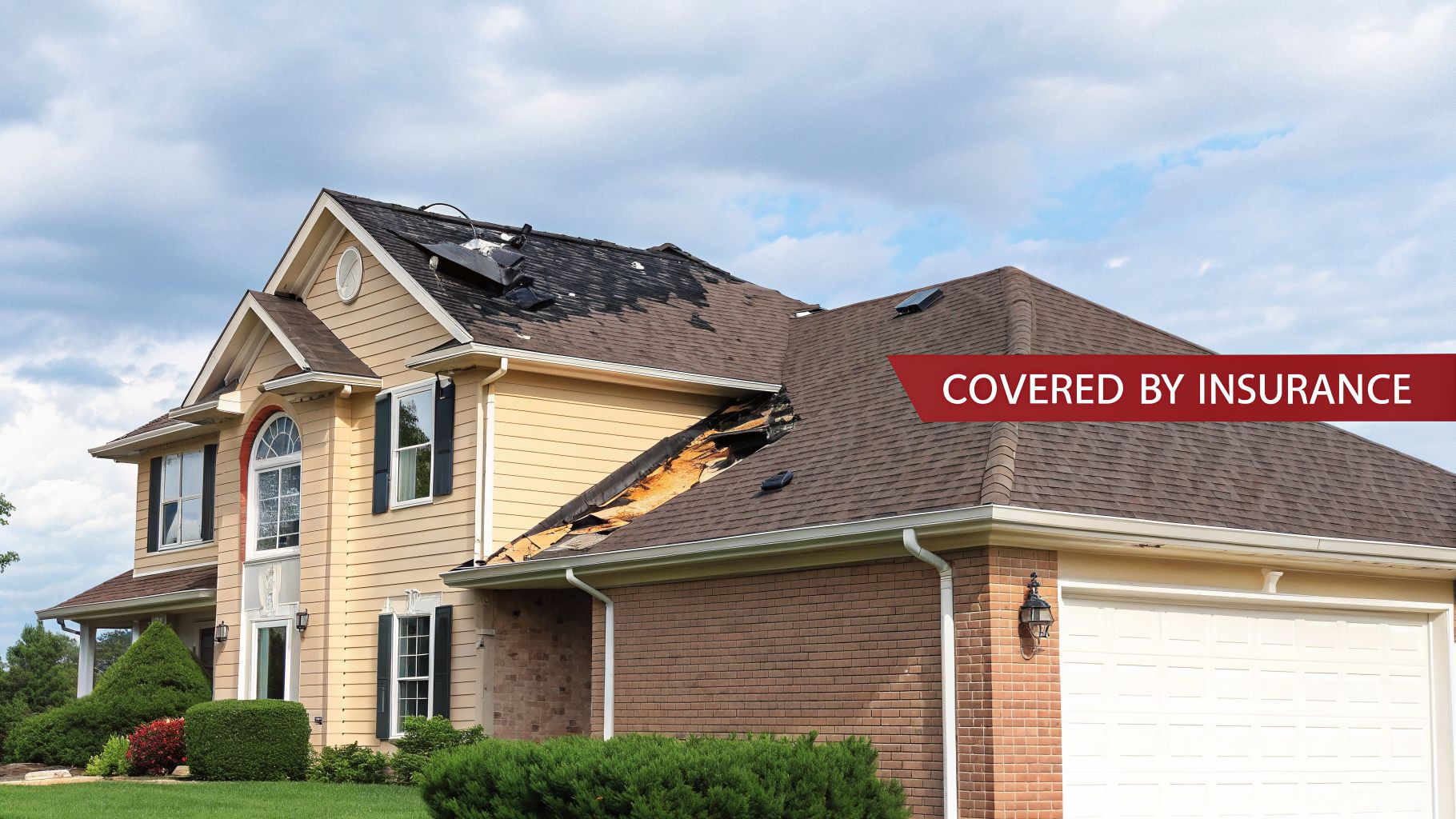
Think of your homeowner's insurance as protection against disasters, not as a maintenance plan. Insurers talk about “covered perils,” which are just the specific types of events your policy agrees to cover. Around here, that almost always means wind and hail. So, if a storm rips shingles off your roof or baseball-sized hail leaves it looking like the surface of the moon, your policy is designed to step in and help.
On the flip side, if your roof is simply 20 years old and has reached the end of its natural life, an insurance company will deny that claim every time. They see that as a predictable maintenance issue, something that's the homeowner's responsibility to manage. This one distinction is the entire foundation of any roof insurance claim.
To make it clearer, here are some common scenarios we see all the time in Texas and how insurance typically views them.
Common Roof Damage Scenarios and Coverage
| Damage Scenario | Typically Covered? | Key Consideration |
|---|---|---|
| Hail damage fracturing shingles | Yes | The damage must be functional, impairing the roof's ability to shed water. |
| Shingles blown off by high winds | Yes | This is a clear example of sudden, accidental damage from a covered peril. |
| A tree branch falling on the roof | Yes | Damage from falling objects during a storm is a standard covered event. |
| An old, worn-out roof is leaking | No | This is considered a maintenance issue, not sudden damage from a specific event. |
| Minor dents on vents/gutters (cosmetic) | It depends | Many policies now have exclusions for purely cosmetic damage that doesn't affect function. |
Ultimately, coverage hinges on proving the damage was caused by a specific, recent storm and not by gradual wear and tear over the years.
Functional vs. Cosmetic Damage
One of the biggest arguments we see between homeowners and adjusters is over functional versus cosmetic damage. It's a critical difference.
- Functional Damage: This is the bad stuff. It's damage that stops your roof from doing its job, like hail impacts that crack the shingle mat, creating a path for water. Missing shingles or punctures from debris also fall into this category. This is what insurance is for.
- Cosmetic Damage: This is damage that just looks bad but doesn't compromise the roof's integrity. Think small dings on metal flashing or a few scuff marks from hail. Some Texas policies now specifically exclude cosmetic damage, so a claim might be denied if the roof still works as intended.
Key Takeaway: Proving the storm damage is functional is everything. A reputable roofer knows how to spot and document damage that truly compromises your roof, which is the evidence you need to get your claim approved.
Replacement Cost vs. Actual Cash Value
The type of policy you bought years ago will have a massive impact on your check from the insurance company. You need to know if you have a Replacement Cost Value (RCV) or Actual Cash Value (ACV) policy.
An RCV policy is the gold standard. It pays the full cost to replace your damaged roof with brand-new, similar materials, minus your deductible. It makes you whole again.
An ACV policy, on the other hand, only pays what your old roof was worth at the moment it was damaged. If your 15-year-old roof gets destroyed, an ACV policy only gives you the depreciated value—which might be a tiny fraction of what a new roof actually costs.
Navigating these policy details can be tricky. For a deeper dive, you can learn more about the storm damage insurance claim process in our complete guide.
Your First Moves After Discovering Roof Damage

After a big Texas storm blows through, the chaos can feel overwhelming. But what you do in these first few hours can make all the difference in getting your insurance claim approved. Before you even pick up the phone to call your insurance company, you need to get your ducks in a row.
First things first: make sure everyone is safe. Check for immediate dangers like downed power lines or broken windows. Once the coast is clear, it's time to start building your case.
Start With a Ground-Level Walk-Around
Whatever you do, don't climb up on a potentially damaged roof. It's just not worth the risk, especially when it's slick from rain or could be structurally weak. You can learn a surprising amount from the safety of the ground.
Take a slow walk around your entire property. What do you see?
- Shingles scattered in your yard or flowerbeds?
- Dents and dings on your gutters, downspouts, or A/C unit fins?
- Cracks or holes in your window screens or siding?
If you see hail damage on the soft metals around your house, you can bet your shingles took a beating, too. This initial look gives you a solid reason to suspect damage and call in a professional.
Don't Skip the Professional Inspection
A quick look from the ground isn't enough to build a claim on. You need a trained eye, which is why getting a professional roofer to perform a detailed inspection is a non-negotiable step. A reputable contractor who works with storm damage in North Texas knows exactly what kind of evidence adjusters need to see.
They’re looking for things like "functional damage"—that’s the insurance term for damage that actually affects your roof’s ability to shed water. This includes things like hail impacts that have fractured the shingle matting or wind-lifted shingles with broken seals. These are the smoking guns that justify a full replacement.
I’ve seen it a hundred times: having a trusted, local roofer inspect your roof before you file the claim is a game-changer. You’ll go into the process knowing the real scope of the damage, giving you a powerful baseline to compare against the adjuster's findings.
Photos, Photos, and More Photos
When it comes to insurance claims, if you don't have a picture, it didn't happen. Your smartphone is your best friend here. Document everything you can find, even if it seems small.
A picture is good, but a well-documented picture is better.
- Get a sense of scale. Put a quarter or a tape measure next to hail dings on your gutters or a particularly nasty-looking spot on a shingle. This gives adjusters undeniable proof of the storm's severity.
- Take wide shots and close-ups. You need the big picture to show the overall scene and detailed shots to highlight specific damage points.
- Don't forget collateral damage. Snap photos of torn window screens, dented fences, and beaten-up patio furniture. It all helps paint a picture of the storm's intensity.
- Look inside. If you have water spots on your ceiling or walls, get clear pictures. Active leaks add a ton of urgency and weight to your claim.
This collection of photos creates a timeline and proves the damage is fresh and directly related to the recent storm, making it very difficult for an insurer to claim it was pre-existing.
Stop the Bleeding: Mitigate Further Damage
Your insurance policy includes a clause called the "duty to mitigate," which basically means you’re required to take reasonable steps to prevent the problem from getting worse. If your roof is actively leaking, you have to stop the water from coming in.
This usually means calling a roofer to put a tarp over the damaged section of your roof. It's a simple fix, but it can save you from thousands of dollars in secondary damage like ruined drywall, soaked insulation, and a nasty mold problem.
Hold onto the receipt for any emergency tarping or temporary repairs. The cost is almost always reimbursable under your claim. More importantly, failing to stop the leak could give your insurance company a reason to deny coverage for all the interior damage that happened after the initial storm.
Getting the Claim Started and Handling the Adjuster
Once you've got your initial damage photos and notes together, it's go-time. This is where you officially file your insurance claim and meet the adjuster, and frankly, it's where your early prep work really starts to matter. How you manage this part of the process can make all the difference between a smooth approval and a major headache.
When you call your insurance company’s claims hotline or log in to their portal, have your essentials ready to go:
- Your policy number
- The date the damage happened (the specific date of the storm)
- A simple, honest description of what you’ve seen—something like, "We got hit by a big hail storm, and I've noticed missing shingles and dented gutters."
Keep it short and sweet. Don't guess about the full extent of the damage; that's what the adjuster is for. Just report that a storm hit and you need an assessment. Once you file, you’ll get a claim number and find out when an adjuster is scheduled to come out.
Your Roofer Is Your Best Asset at the Adjuster Meeting
The adjuster's visit is the make-or-break moment for your claim. This is the person the insurance company sends to inspect your roof and write the "scope of loss"—their official opinion on what needs to be fixed or replaced. These folks are professionals, but they're also human. They're often juggling dozens of claims after a big storm and can easily miss things.
This is precisely why having your roofing contractor there for that meeting is the most powerful move you can make.
Think of it this way: your roofer is your advocate on the ground. They speak the same industry language as the adjuster and can point out damage that isn't immediately obvious, especially to someone in a hurry.
An Insider's Tip: A good, experienced roofer will do their own full inspection before the adjuster ever shows up. They’ll mark every single hail hit with chalk and map out all the damage on every slope of your roof. This gives the adjuster a complete and undeniable picture, not just a quick glance.
Your contractor will champion your case, making sure items like starter strips, ridge caps, proper ventilation, and crucial ice and water shields are all included in the claim. It turns what could be a tense meeting into a productive, professional review focused on one thing: getting your home restored the right way.
How to Set Yourself Up for Success
You wouldn't walk into an important business meeting unprepared, and this is no different. A little organization goes a long way.
Before the adjuster arrives:
- Get Your Paperwork in Order: Have your folder ready with your contractor's inspection report, all your photos and videos, and any receipts for temporary fixes, like tarping.
- Confirm Your Contractor's Attendance: This is critical. Double-check that your roofer is scheduled to be there for the inspection. You do not want the adjuster on your roof alone.
- Clear the Path: Make sure there's safe, easy access to your roof and around the entire property.
During the meeting, it's best to walk the property with both your contractor and the adjuster. When everyone is looking at the same damage together, it builds agreement from the start and dramatically cuts down the risk of disputes later on.
The financial stakes here are incredibly high. In 2026, roof repair and replacement costs in the U.S. are projected to rocket past $31 billion. For homeowners in hail alleys like Dallas-Fort Worth and East Texas, this number shows just how important a properly handled claim is.
While this guide focuses on your roof, understanding the general insurance claims process can give you a major leg up. Sometimes, especially with complex or unfairly denied claims, you need a different kind of expert in your corner. If you find yourself in a tough spot, learn more about when to hire a public adjuster for a roof claim. Having a professional team on your side puts you in the strongest position to get a fair, accurate, and complete settlement.
Decoding Your Insurance Estimate and Scope of Work
After the adjuster leaves, you’ll get a document that can look more intimidating than your tax forms. This is the insurance estimate, often called a "scope of loss." It’s usually generated with software like Xactimate and is packed with hundreds of line items, weird acronyms, and complex calculations. Frankly, it’s written for industry pros, not for you.
But here’s the thing: you have to understand it. This document is the insurance company’s official first offer, spelling out exactly what they agree to pay for—and, just as importantly, what they’ve decided to leave out.
The initial part of the claim is pretty straightforward, usually following these three steps before this critical document lands in your inbox.
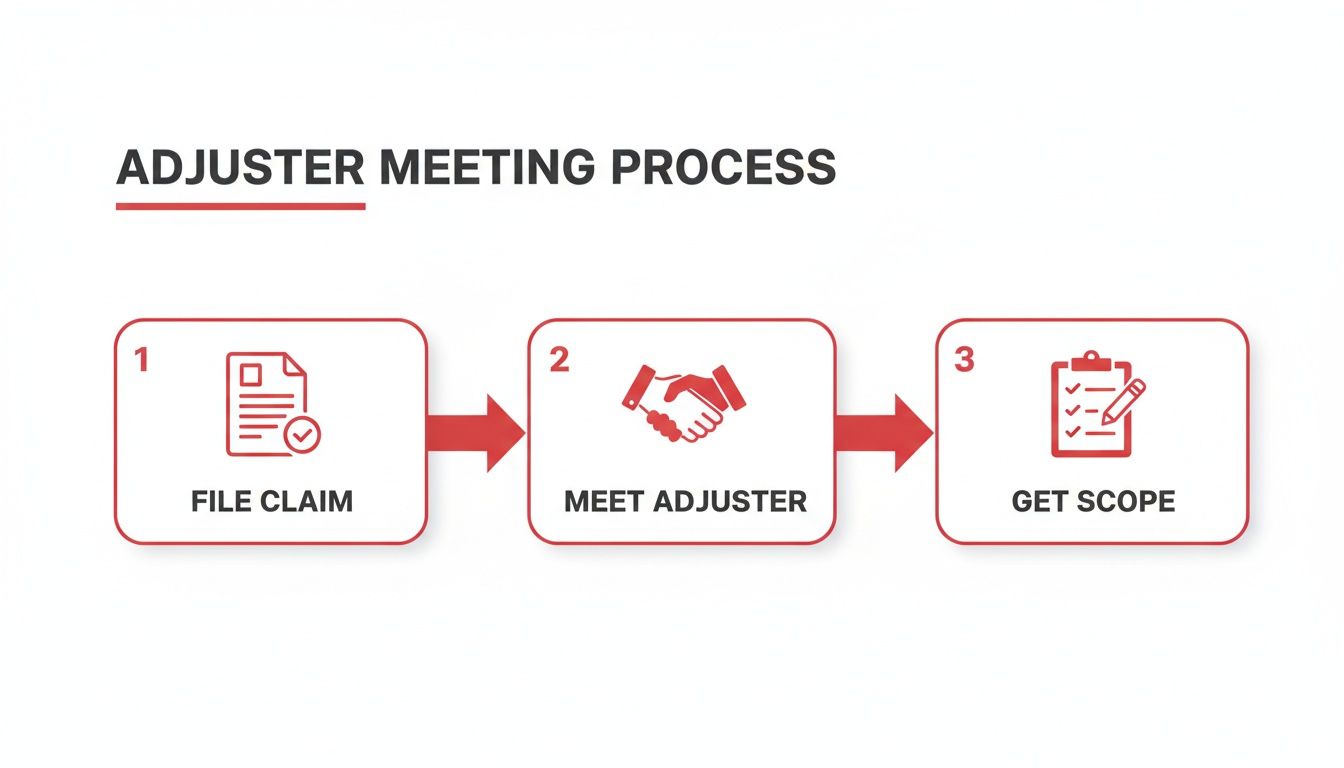
Once you get that scope, the real work begins. It’s time to dig into the numbers.
The Key Numbers: RCV, ACV, and Depreciation
To make any sense of the paperwork, you first need to get a handle on three terms that drive the entire financial side of your claim.
- RCV (Replacement Cost Value): This is the big number, the one you’re aiming for. It’s the total estimated cost to replace your roof today, using new, similar materials at current prices.
- Depreciation: This is the amount the insurance company holds back to account for your old roof’s age and general wear and tear. Think of it like a car—a 15-year-old roof just isn't worth the same as a brand-new one.
- ACV (Actual Cash Value): This is simply the RCV minus the depreciation. The ACV represents what your old, damaged roof was worth the moment the storm hit.
Your first check from the insurance company will be for the ACV amount, minus your deductible. This is not the final payment; it’s just the down payment to get things started. That depreciation money isn't gone for good.
Crucial Insight: The depreciation amount is "recoverable." After the roof replacement is finished and you provide the final invoice to your insurer, they release that money to you in a second check. This two-check system is their way of making sure you actually get the work done.
Comparing the Insurer's Scope with Your Contractor's Estimate
This is where having a trustworthy, experienced roofer in your corner becomes absolutely essential. I can’t tell you how many initial insurance estimates I’ve seen that are incomplete. It’s incredibly common. Adjusters are swamped after a major storm and often miss things that are required for a proper, code-compliant roof replacement.
Your contractor's estimate serves as a detailed audit of the insurer's scope. We regularly find that adjusters have overlooked key components.
Commonly Missed Items in Insurance Scopes:
- Ice & Water Shield: This is a waterproof membrane that’s required by code in valleys and around all roof penetrations.
- Proper Valley Metal: Using the right gauge and profile of metal is critical for channeling water off your roof.
- Sufficient Ventilation: Your roof needs the right number of vents to comply with building codes and not void the shingle manufacturer's warranty.
- Starter Shingles & Ridge Cap Shingles: These aren't just regular shingles cut to fit; they are specialized products for the edges and peak of your roof.
- General Overhead & Profit (O&P): This is a standard 10% and 10% cost that covers a general contractor's operational expenses. It’s a completely legitimate part of any complex storm restoration project involving multiple trades.
When your roofer points out these missing items, it’s not about starting a fight. It’s the beginning of a professional negotiation.
The Supplement Process: Securing Full Funding
Getting those missing items paid for is handled through a process called a supplement. Your contractor will build a detailed supplemental claim that includes photos, citations from local building codes, and itemized estimates for the missing materials and labor. This whole package gets sent to the insurance adjuster for approval.
For example, maybe the adjuster only approved replacing a couple of vents, but local code requires ten for a roof your size. Your roofer will supply the documentation to justify the added cost. This back-and-forth is a normal part of the claims process. It ensures your roof gets built right without you having to pay out-of-pocket for the insurance company’s oversights.
A successful supplement gets the RCV adjusted upward to cover the true cost. This is the final step to ensuring your roof replacement covered by insurance is fully funded, leaving you responsible only for your deductible.
If you’re wondering what kind of damage even triggers these claims, our guide on how hail damage roof replacement is assessed is a great place to start.
Special Considerations for Texas Homeowners
If you live in Dallas-Fort Worth or East Texas, you know our weather plays by its own rules. The storms hit harder, the hail is no joke, and navigating an insurance claim for your roof has its own unique quirks. When a storm rolls through and leaves its mark, it’s not just about fixing the damage—it’s a chance to make your home stronger for the next one.
Getting your insurance to cover a roof replacement is step one. But with a smart approach, you can turn that claim into a major home upgrade, increasing your property's resilience and even saving you money down the road. Let’s talk about three things every North Texas homeowner needs to have on their radar.
Upgrading to Class 4 Impact-Resistant Shingles
So, the adjuster came out, and your roof replacement is approved. Before you just sign off on the same old shingles, this is the perfect moment to consider an upgrade to Class 4 impact-resistant (IR) shingles. These aren't your standard architectural shingles; they're built differently, specifically engineered and put through rigorous testing to withstand hail up to 2 inches in diameter.
Here's the best part: the cost to upgrade is a lot less than you'd think. Your insurance is already footing the bill for a brand-new, standard roof (the Replacement Cost Value). You're only on the hook for the difference in material cost between standard shingles and the Class 4 product. For most homes, it’s a relatively small out-of-pocket investment for a massive leap in protection.
Pro Tip: Many Texas insurance carriers give hefty premium discounts for homes with a certified Class 4 roof, often anywhere from 15% to 35% a year. Those savings can pay you back for the upgrade in just a few years, making it one of the smartest financial moves you can make.
Dealing with Solar Panels During a Roof Replacement
Solar panels are fantastic for cutting down those Texas summer electricity bills, but they do add an extra step to the roof replacement process. To do the job right, the panels and all their mounting hardware have to be professionally taken down before we can tear off the old roof, and then put back on once the new one is installed. This process is known in the industry as a "detach and reset."
This is a crucial detail for your claim. The cost for a solar detach and reset isn't an "extra"—it's a required part of the restoration process caused by the storm damage. Your roofing contractor needs to make sure this is properly documented and included in the scope of work submitted to your insurance carrier. An experienced storm restoration team will handle the coordination with a certified solar company to make sure the entire process is seamless.
Bundling Other Storm Damage into One Claim
Think about the last bad hailstorm you saw. It rarely damages just the roof. A storm powerful enough to total your shingles almost certainly left its mark on other parts of your property. It’s always more efficient to roll all of this damage into a single, comprehensive claim.
Take a walk around your house after a storm and look closely. Better yet, have your contractor do a full property inspection. You'd be surprised what gets damaged.
Common things to bundle with your roof claim:
- Gutters and Downspouts: Hail leaves very obvious dents and dings in aluminum gutters.
- Window Screens: It doesn’t take much hail to tear, rip, or puncture delicate window screens.
- Siding and Paint: Look for chips, cracks, or pockmarks on your siding and painted surfaces, especially on the side of the house that faced the storm.
- Fencing: Hail can blast the stain right off a wooden fence or leave dents all over it.
When you bundle all these repairs together, you only have to meet your deductible once and deal with one contractor. This simplifies everything and ensures your entire property is brought back to its pre-storm condition, making sure your insurance-covered roof replacement is part of a complete restoration.
What to Do If Your Claim Is Denied or Underpaid
It’s a gut punch. After all the waiting and inspections, you open the letter from your insurance company, and they’ve either denied your roof claim outright or offered a laughably low amount. It’s frustrating, but I’ve seen this happen countless times. This is absolutely not the end of the road.
In many cases, an insurance company’s first offer is just that—a starting point. Your first strategic move is to demand their decision in writing. Don’t accept a denial over the phone. A formal letter forces them to state a specific, documented reason for their decision, and that’s the foothold you need to start pushing back.
That letter gives you the exact argument you need to dismantle.
Responding to Common Denial Reasons
When it comes to denials, insurers tend to lean on a few familiar excuses. I see it all the time. They might claim the damage was “pre-existing” or just normal “wear and tear,” basically saying your roof was already failing before the storm ever hit.
Another common tactic, especially with metal roofing, is to label the damage as purely “cosmetic.” They’ll argue that while the dents might be ugly, they don’t actually compromise the roof’s ability to keep water out.
Your best defense is a strong offense, and that means fresh, undeniable evidence. This is where getting a second opinion from a different, highly-respected local roofer is a game-changer. They can perform their own thorough inspection, providing a detailed counter-assessment with new photos and an expert analysis that clearly separates storm damage from anything else.
A denial isn't a final verdict; it's the start of a negotiation. In a recent year, nearly 47% of Texas home insurance claims were initially closed without payment, which just goes to show how often homeowners have to fight for what they're owed.
Escalating an Underpaid Claim
What happens if the claim gets approved, but the estimate won't even cover the cost of materials, let alone labor? This is an incredibly common scenario. If the adjuster’s initial report, or “scope of work,” is missing critical line items, the supplement process is your first line of attack. Your contractor will formally submit documentation for these missing costs, and often, that’s all it takes.
But what if the adjuster is just being unreasonable and refuses to approve legitimate supplements? You still have options for escalating the issue.
- Request a Different Adjuster: You have every right to politely but firmly ask for a new adjuster. Explain that you’ve reached an impasse and believe a fresh set of eyes is needed to resolve the claim fairly.
- Speak to a Manager: If you can't get a new adjuster, ask to speak directly with the claims manager. Supervisors have more authority and can often override a field adjuster’s decision to get a difficult claim settled.
- Hire a Public Adjuster: If you’re getting stonewalled at every turn, it may be time to bring in a heavyweight. Public adjusters are licensed by the state and work for you, not the insurance company. They’re experts in policy language and negotiation, and while they take a percentage of the claim, their skill can be the key to overturning a denial or getting a fair settlement on a complex claim.
Don't back down. With a knowledgeable roofing partner who knows the insurance game and a clear strategy, you can successfully challenge an unfair decision and make sure your roof replacement covered by insurance is fully funded.
Your Top Roof Insurance Questions, Answered
After a big storm rolls through DFW or East Texas, the questions start rolling in, too. It's completely normal to feel a bit overwhelmed when staring down an insurance claim. Let's clear up some of the most common concerns we hear from homeowners just like you.
How Long Do I Have to File a Claim in Texas?
This is a big one. Officially, Texas law generally gives you two years from the date of the storm to file a claim. But here's the catch: virtually every policy has a clause that requires you to report damage "promptly."
Waiting months is a mistake. The longer you wait, the harder it becomes to definitively link the damage to a specific storm. Insurers can (and will) use that delay as a reason to question or even deny your claim. The best move is to get a professional inspection right away and file as soon as damage is confirmed.
Will Filing a Claim Make My Rates Go Up?
This is the fear that stops many people from getting the repairs they need. The short answer is no, a single claim for storm damage—what insurers call an "Act of God"—should not raise your individual premium.
Here's how it really works: After a widespread disaster like a major hailstorm, carriers often raise rates for the entire affected zip code or region to offset their massive losses. This means your rates could go up whether you file a claim or not. Don't let this stop you from using the coverage you've been paying for.
Can I Just Keep the Insurance Money?
It can be tempting to see that check and think about other ways to use it, but this is a move you'll regret. Pocketing the money without doing the repairs is not only a bad idea—it can be considered insurance fraud.
If you have a mortgage, your lender is also named on the check. They won't release the final payment until you provide proof that the work was actually completed. Even if you own your home outright, your insurer will drop coverage for your roof, leaving you completely exposed to the next storm.
For contractors, guiding a homeowner through this stressful process is a huge opportunity to build trust. Delivering a great experience often translates directly into a stellar public image. To learn more, check out these Online Reputation Management Best Practices for Contractors.
What if My Contractor's Estimate Is Higher?
Don't panic—this happens all the time. In fact, it's a standard part of the process. The initial insurance estimate is often just a starting point and frequently misses crucial items.
An experienced local roofer knows this and will file a supplement on your behalf. This is a detailed document outlining all the legitimate costs the adjuster overlooked, from code-required upgrades and specific flashing to proper ventilation. The goal is to negotiate with the insurance company to ensure they cover the full, fair cost of a proper replacement. When it's done right, you should only be responsible for your deductible.
Navigating a storm damage claim is what we do every day. If you suspect your roof was damaged in a recent storm, trust the team at Hail King Professionals to give you an honest assessment. We provide a free, no-obligation inspection and can guide you through every step of the insurance process.
Visit us at https://hailkingpros.com to schedule your inspection today.