
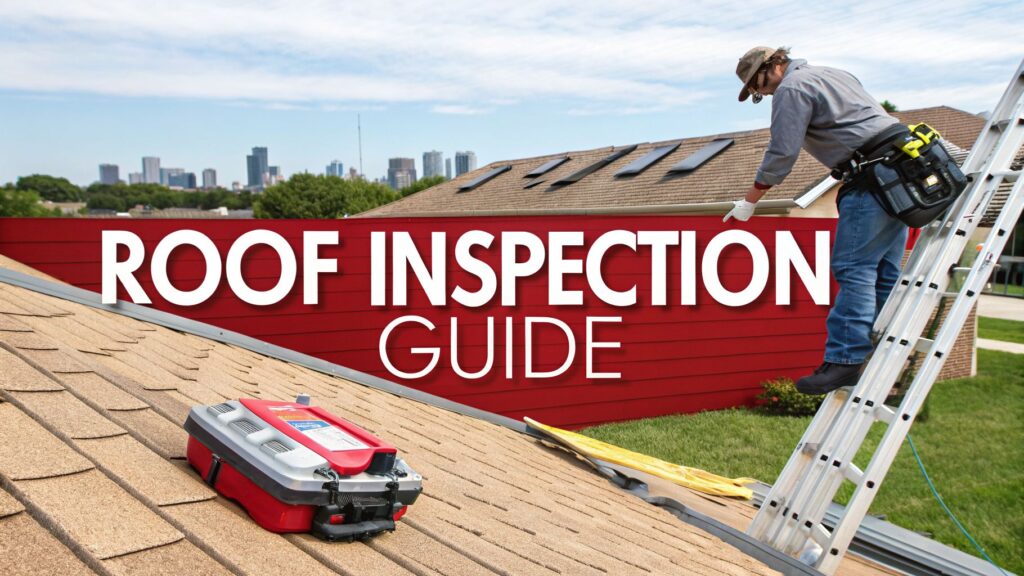
Your Guide to Roof Inspection Dallas in 2026
When it comes to protecting your home in Dallas, few things are as vital as a professional roof inspection. It’s far more than a quick glance from the driveway; it’s a complete health check-up for the single most important barrier standing between your family and the harsh North Texas weather.
Why a Dallas Roof Inspection Is Your First Line of Defense
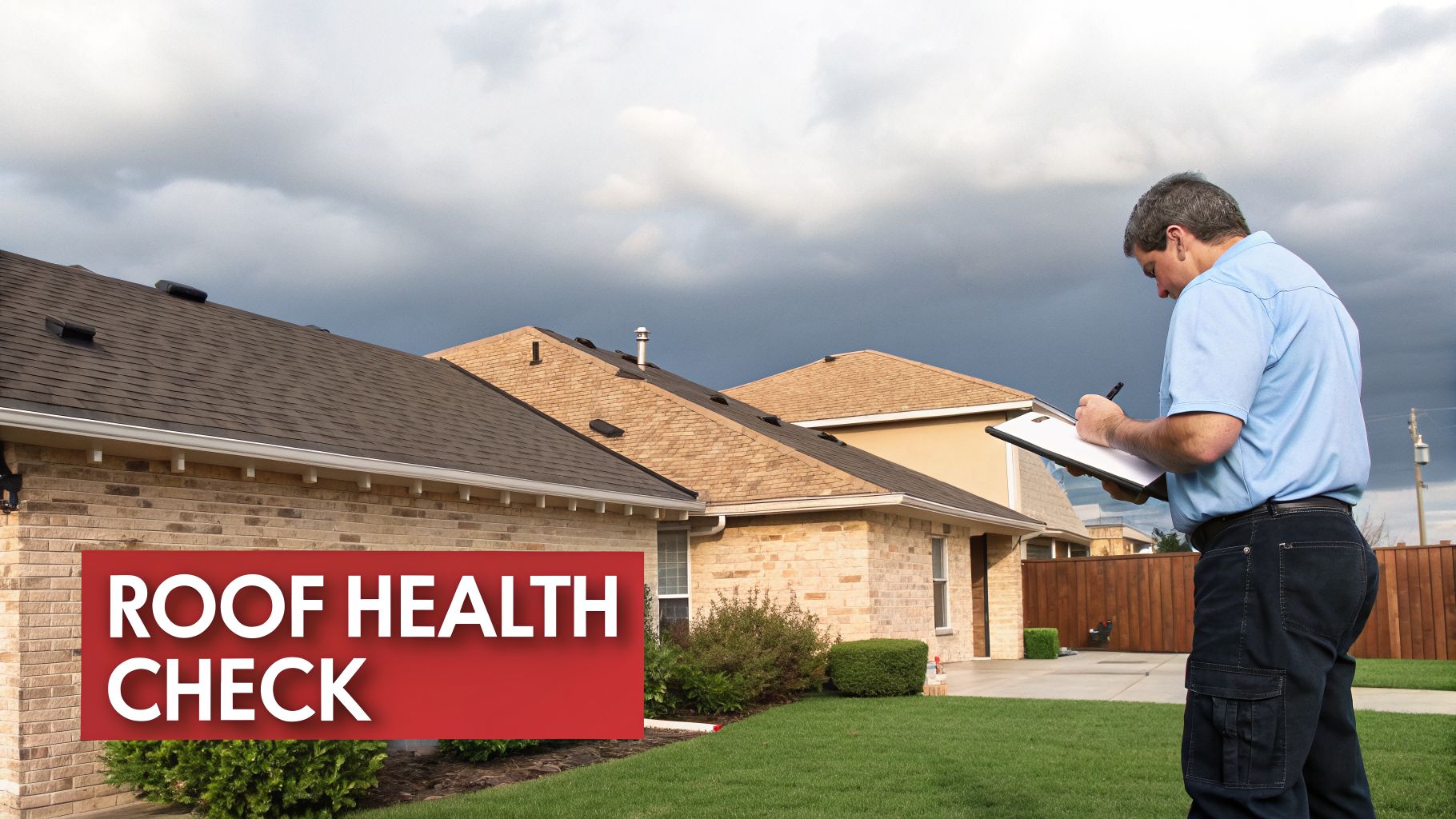
Think of your roof as the frontline defense for your entire property. In many parts of the country, that shield just has to deal with some rain and sun. But here in Dallas, it’s constantly under assault from hailstones, severe winds, and punishing temperature swings. This isn't just an annoyance—it's a massive financial risk.
Putting off an inspection is like skipping your annual physical. You might feel perfectly fine, but an unseen issue could be quietly growing into a full-blown emergency. A tiny, hidden crack in a shingle today can easily become a major leak tomorrow, leading to thousands in water damage, structural rot, and mold remediation.
The Unforgiving North Texas Climate
The weather in the Dallas-Fort Worth area is notoriously brutal on roofing materials. We see a vicious cycle where intense summer heat bakes the shingles, making them brittle, right before violent hailstorms move in to shatter them. This creates a perfect storm for premature roof failure, which is why being proactive isn't just a good idea; it's absolutely essential for any DFW homeowner.
Here in the heart of "Hail Alley," storms are a fact of life. North Texas gets an average of 4-6 major hail events annually, with some storms powerful enough to obliterate an asphalt roof in just a few minutes. It's no surprise that Texas ranks fourth in the nation with nearly 6,000 roofing companies as of 2025—the demand is relentless.
Here’s the critical part: waiting to call for an inspection after a storm can inflate your final repair bill by 300% or more. It’s the difference between a manageable fix and a financial nightmare.
A timely roof inspection isn't an expense; it’s an investment in financial security. It’s the difference between a minor, affordable repair and a major, budget-breaking replacement.
Preventing Catastrophe with Proactive Care
By the time you see a brown stain spreading across your ceiling, it's already too late. The damage has moved past your roof and has started to attack your home's internal structure. A professional roof inspection in Dallas is designed to find those weak spots before they’re breached.
An expert roofer is trained to spot issues an untrained eye would miss every time. We’re looking for things like:
- Subtle Hail Bruising: Small, dark spots on shingles where the protective granules have been knocked loose, exposing the asphalt to UV rays.
- Cracked Pipe Boot Seals: The rubber gaskets around your roof's vent pipes dry out and crack under the Texas sun, creating a direct funnel for rainwater.
- Lifted Shingles: High winds can easily break the factory sealant holding your shingles down, allowing wind-driven rain to get underneath.
- Deteriorating Flashing: The metal strips around chimneys, skylights, and valleys can rust or pull away, exposing some of your roof's most vulnerable points.
Catching these problems early is everything. We’ve seen countless homeowners who didn’t realize the extent of the damage until it was too late and they were facing multiple signs they need a new roof. A proactive inspection gives you a clear, actionable plan and the peace of mind that comes with knowing your home is secure.
The 4 Main Types of Roof Inspections Explained
Not all roof inspections in Dallas are one-size-fits-all. It's a bit like seeing your doctor. Sometimes you’re there for a routine physical, and other times you’re rushing in after a nasty fall. Your roof needs the same specialized care, and calling for the right type of inspection saves you a ton of hassle and money down the line.
Knowing the difference between a simple check-up and a post-storm forensic analysis is what makes you a savvy homeowner. Let's walk through the four main types so you know exactly what to ask for.
1. Routine Maintenance Inspections
Think of this as your roof's annual physical. A routine maintenance inspection is all about being proactive. You’re not waiting for a leak to show up in your living room; you're catching tiny issues before they have a chance to become huge, expensive headaches.
Just like changing the oil in your car, an annual look-over is essential maintenance that preserves your roof's health, especially under the brutal North Texas sun. This isn’t a luxury—it’s the single best way to maximize the life of your roof.
During a routine check, a seasoned professional is looking for the subtle signs of aging and wear:
- Cracked or dried-out sealant around pipes and flashing.
- Minor granule loss on your shingles, which is the first sign of UV degradation.
- Early patches of algae or moss, which are notorious for trapping moisture against the roof deck.
- Gutters that are clogged or pulling away from the house, which can cause water to back up and rot the fascia.
This is your first line of defense against the quiet, slow-moving problems that often cause the most damage over time.
2. Storm Damage Inspections
This is the emergency room visit for your roof. After a Dallas hailstorm or a major wind event, getting a storm damage inspection is non-negotiable. Hail is especially sneaky. From the ground, your roof might look perfectly fine, but up close, those hailstones leave behind small bruises and fractures that compromise the shingle’s integrity.
A professional storm damage roof inspection is focused and forensic. The inspector isn’t just looking for damage; they’re looking for evidence that directly ties the damage to that specific storm.
A detailed storm damage report from a trusted local roofer is your single most powerful piece of evidence for an insurance claim. It provides the clear, documented proof adjusters need to approve your claim for repairs or replacement.
Time is of the essence here. The sooner you get the damage documented by a professional, the stronger your insurance claim will be. If you wait weeks or months, it becomes much harder to prove the damage came from one specific event.
3. Real Estate or Pre-Purchase Inspections
When you’re buying or selling a home, the roof is a massive financial factor. A real estate roof inspection gives everyone involved a clear, unbiased picture of the roof’s health, its remaining lifespan, and any repairs that need to be addressed immediately.
For a buyer, this is critical negotiating leverage. You can ask for repairs to be made before closing or adjust your offer accordingly. For sellers, getting a pre-listing inspection done is a smart move. It demonstrates transparency and gives buyers peace of mind, helping you avoid eleventh-hour negotiations that could kill the deal.
4. Insurance Claim Inspections
While it sounds similar to a storm damage inspection, an insurance claim inspection has a very specific mission: to build an ironclad case for your insurance company. This inspection is incredibly thorough because every detail is meant to justify the claim. It involves meticulous photo documentation, precise measurements, and a formal report written in the language insurance companies understand.
Think of your roofer as your advocate in this scenario. A good roofer will often meet the insurance adjuster on-site, walk the roof with them, and point out damage the adjuster might otherwise miss. This hands-on approach is key to ensuring the final scope of work is accurate and that your claim covers everything needed to bring your roof back to its pre-storm condition.
What Happens During a Professional Roof Inspection
So, you’ve decided it’s time for a roof inspection in Dallas. What should you actually expect? A true professional inspection isn't just a guy with a ladder taking a quick peek. It's a thorough, methodical process that covers your entire roofing system, from the ground up to the attic inside. It's all about getting a crystal-clear, honest assessment of your roof's health.
This isn't a five-minute glance from a storm chaser. Think of it more like a full diagnostic workup for your home. A legitimate roofer follows a very specific procedure, similar to how a property manager uses a detailed rental property inspection checklist, to make sure absolutely nothing gets missed.
The Initial Ground-Level Assessment
Believe it or not, a proper inspection starts on the ground. A trained inspector begins by walking the entire perimeter of your property, looking for tell-tale signs of trouble that can be spotted from below. These initial clues help them know exactly what to look for once they’re up on the roof.
During this ground-level walk, the inspector is hunting for:
- Siding and Window Issues: Water stains on your home's siding or around the window frames can be a dead giveaway for failing flashing higher up on the roof.
- Ground-Level Debris: Finding shingle granules—the sandy material from your shingles—in the runoff from your downspouts is a classic sign of an aging, deteriorating roof.
- Soffit and Fascia Damage: They'll carefully check the overhangs for any rot, water stains, or even pest damage. These often point back to issues with your gutters or poor attic ventilation.
This first step essentially creates a "map" of potential problem areas, making the on-roof portion of the inspection far more efficient and focused.
The Comprehensive On-Roof Examination
Now for the main event. This is the most crucial part of any roof inspection Dallas homeowners will get. Outfitted with safety gear, the inspector will get on your roof and physically examine every square foot, documenting everything with high-resolution photos along the way. This is a hands-on analysis, not just a casual stroll.
Here’s what they are meticulously checking up close:
- Shingle Condition: They're feeling for soft, bruised spots from hail, looking for cracks caused by heat, and identifying any shingles that are missing, lifted, or balding from granule loss.
- Flashing Integrity: This is huge. They'll scrutinize the metal strips around chimneys, skylights, and in the roof's valleys. Since this is where over 90% of roof leaks originate, making sure it's sealed tight is non-negotiable.
- Sealant and Gaskets: The rubber boots around your vent pipes are notorious for drying out and cracking under the Texas sun. An inspector will check every single one.
- Ridge Cap and Vents: They’ll ensure the shingles on the peak of your roof (the ridge cap) are secure and that all vents are clear and working properly to let heat and moisture escape your attic.
Every photo taken during this stage serves as undeniable proof. This detailed visual evidence is what transforms your inspection report from a simple opinion into a powerful tool for insurance claims or repair negotiations.
The Final Interior and Attic Check
A roof can look perfectly fine from the outside while hiding serious problems underneath. That’s why the final piece of a comprehensive inspection happens inside your house—specifically, in the attic. This is where an inspector can spot the "smoking gun" that confirms a hidden leak.
From inside, they’ll be looking for:
- Water Stains or Dark Spots: These on the underside of the roof decking are clear evidence that water is getting through.
- Daylight Penetration: On a bright day, even tiny pinholes of light are direct invitations for water to enter your home.
- Inadequate Ventilation: An inspector can tell if your attic is "breathing" properly. Trapped heat and moisture will literally cook your shingles from the inside out, shortening your roof's lifespan.
- Signs of Mold or Mildew: Any visible mold or mildew growth on the wood surfaces is a sure sign of a long-term moisture issue that needs to be addressed immediately.
By connecting the dots between the exterior, interior, and ground-level findings, you get a complete and accurate picture of your roof's true condition.
Understanding Inspection Costs and Insurance Claims
Let's get right to the two questions on every Dallas homeowner's mind: what's this going to cost, and how does my insurance play into it? Sorting out the financial side of a roof inspection in Dallas, especially after a storm, can feel like a maze. But once you understand the process, you can make smart decisions that protect your home and your wallet.
The price for a professional roof inspection is one of the best low-cost investments you can make. For a standard, non-emergency checkup, you can expect to pay somewhere between $250 and $600. That said, most reputable local roofers, including us at Hail King Professionals, will offer a comprehensive inspection for free, particularly after a big hailstorm rolls through the area.
Factors That Influence Inspection Costs
If there is a charge, the final price isn't pulled out of thin air. A sprawling, complex roof with steep pitches, multiple levels, and features like skylights or dormers simply takes more time and equipment to inspect safely and thoroughly, which can nudge the cost up.
A few key variables will determine the price:
- Roof Size and Square Footage: A bigger roof means more ground (or shingles) to cover.
- Roof Complexity: Navigating steep slopes or multiple rooflines requires more time and safety gear.
- Material Type: Specialized materials like slate, tile, or metal demand a different, more intricate inspection process than standard asphalt shingles.
- Inspection Type: A routine check-up is much quicker than a detailed forensic inspection needed to build a robust insurance claim.
No matter the final number, the value you get from a professional report is immense. When storm damage is present, that report often pays for itself many times over.
Your Inspection Report Is Your Strongest Insurance Ally
After a Dallas hailstorm, that detailed inspection report is the single most powerful tool you have. It’s your proof. Think of it as the core evidence in your case to the insurance company for why they need to fund a full roof replacement.
An insurance adjuster is trained to look for specific, undeniable proof of loss. A vague note that just says "hail damage" won't get you very far. They need clear, documented evidence to approve a claim.
A professional inspection report packed with high-resolution, dated photos and precise notes is your ticket to a smooth claims process. It removes ambiguity and provides the hard evidence adjusters require to approve your claim for a full roof replacement.
Going into a claim without this level of professional documentation puts you at a huge disadvantage. An adjuster, who may be rushing from one house to the next, can easily overlook subtle bruising or hidden fractures in the shingles. This often leads to an underpaid claim that only covers a few minor repairs, leaving you on the hook for a much bigger bill down the road.
Partnering with Your Roofer for a Successful Claim
The best roofers don't just hand you a report and walk away; they become your advocate through the entire insurance process. When you file a claim, your insurance provider sends their own adjuster out to assess the damage. A good roofer will make a point to be there, on your roof, right alongside the adjuster.
This is a critical step. Your roofer can point out damage that isn't immediately obvious and explain the long-term consequences. They speak the same technical language as the insurance company and can make a strong, evidence-based case for a fair settlement that covers everything needed to make your home whole again. For a closer look at this process, check out our in-depth guide to the storm damage insurance claim process.
A Smart Upgrade That Pays You Back
Here’s one last financial tip from the field. When it's time to replace your roof, seriously consider upgrading to Class 4 impact-resistant (IR) shingles. While they cost more upfront, most Texas insurance providers offer substantial discounts on your annual homeowner's premium for installing them. These shingles are built to withstand hail up to two inches in diameter—a game-changer in North Texas.
In just a few years, the savings on your insurance can completely pay for the initial upgrade cost. All the while, you’re protected by a stronger, more resilient roof that can handle the next storm. It’s a proactive investment that safeguards your home and saves you money in the long run.
Choosing the Right Roofing Professional in Dallas

So, you've had a professional roof inspection in Dallas, and you have a report in your hands. Now comes the most important decision you'll make: choosing the team to do the work. This isn't just about hiring someone to nail down a few shingles; it's about finding a partner you can trust to protect your home's value and your family's safety.
In a market crowded with options, it's easy to get overwhelmed. But the difference between a standard contractor and a true professional is night and day. A poor choice can lead to years of headaches, from persistent leaks to problems with your insurance. Your goal should be to find a long-term expert, not just a quick fix.
So, what separates the best from the rest? Let's break down the key differences.
What to Look For in a Dallas Roofing Partner
| Feature | Typical Contractor | A Trusted Professional |
|---|---|---|
| Guarantee | Vague promises or manufacturer warranties only. | Offers a 100% satisfaction guarantee on workmanship. |
| Local Knowledge | May be an out-of-town "storm chaser." | Decades of specific Dallas-Fort Worth experience. |
| Services Offered | Only does roofing. | Provides comprehensive storm restoration (gutters, siding, solar). |
| Financial Options | Limited or requires a hard credit pull. | Flexible financing with soft credit checks and no prepayment penalties. |
| Customer Focus | Transactional; focused on closing the sale. | Relational; focused on your long-term peace of mind. |
Choosing a roofer who ticks all the boxes in the "Trusted Professional" column ensures you're investing in quality and security, not just a repair.
A Satisfaction Guarantee You Can Count On
One of the biggest indicators of a quality company is a rock-solid 100% satisfaction guarantee. This isn't just a catchy phrase on a truck—it's a legally binding promise that the company stands behind its work completely.
Think of it as the ultimate safety net. It means the contractor assumes all the risk, and their job isn't done until you are completely happy with the result. This level of accountability is rare, and it tells you everything you need to know about their confidence in their skills, materials, and processes.
Why Deep Local Experience Matters
Dallas weather isn’t for the faint of heart. The hail, the blistering sun, the high winds—it takes a toll. An out-of-state contractor, often called a "storm chaser," simply doesn't have the on-the-ground experience to build a roof that can withstand our unique climate.
A true local expert with decades of history in DFW knows things others don't:
- Which specific materials stand up to the relentless Texas sun without cracking.
- The proper installation techniques to combat wind uplift during a severe thunderstorm.
- The ins and outs of local building codes in your specific city, from Plano to Fort Worth.
This kind of firsthand knowledge is priceless. It means your project is guided by someone who has seen it all before and knows exactly how to protect your home for the long haul. You can learn more about vetting local experts by reading our guide on how to choose a roofing contractor.
Choosing a roofer with deep local roots means you're not just hiring a contractor; you're gaining a partner who understands the unique weather challenges your home faces every single year.
More Than Just a Roofer
When a major hailstorm rolls through, the damage is rarely confined to just your roof. Your gutters get dented, siding gets cracked, and window screens get shredded. A top-tier professional understands this and offers a full suite of services, saving you the immense hassle of juggling multiple contractors.
This "one-stop-shop" approach is a sign of a company built around the customer's needs. Look for a team that can handle:
- Gutters and Downspouts: A crucial part of your home's water management system.
- Siding and Exterior Painting: Restoring your home's curb appeal and structural integrity.
- Fencing and Window Screens: Taking care of all the other collateral damage from a storm.
And in today's world, a forward-thinking company must be equipped to handle renewable energy. A specialized solar panel detach-and-reset service is essential for homeowners with solar arrays, ensuring they're removed and reinstalled correctly during a reroof without voiding warranties.
Flexible Financing Removes Barriers
Let's be honest—a new roof is a major investment, and it often comes at an unexpected time. A contractor who genuinely cares about helping homeowners will provide clear, flexible financing options to make it manageable.
The best companies offer plans with customer-friendly features like soft credit checks that don't harm your credit score, no penalties for paying the loan off early, and options that don't require you to tap into your home's equity. This kind of flexibility empowers you to make the best decision for your home's safety without feeling financially cornered. It's a clear sign that their priority is protecting your home, not just making a sale.
Frequently Asked Questions About Dallas Roof Inspections
When it comes to your roof, a little bit of knowledge goes a long way. We get a lot of the same questions from homeowners across Dallas, so we’ve gathered them here to give you straightforward answers. Our goal is to clear up any confusion and give you the confidence you need to protect your home.
How Often Should I Get a Roof Inspection in Dallas?
Here in the Dallas-Fort Worth area, we tell homeowners to get a professional roof inspection at least once a year. It’s best to think of it as an annual physical for your home's most critical line of defense. A yearly check-up lets us catch and fix small things—like a few lifted shingles or some cracked sealant—before they turn into a full-blown, expensive leak.
That said, you should always schedule an inspection right after a major storm, especially one involving hail or high winds. North Texas weather can be brutal, and the damage it leaves behind is often invisible from the ground but can seriously compromise your roof.
A post-storm inspection is non-negotiable for two big reasons:
- It Finds Hidden Damage: A trained eye can spot subtle hail bruises and tiny stress fractures that most people would never notice.
- It Gives You Insurance Proof: This inspection creates the official documentation you need to file a successful insurance claim on time.
Will a Roof Inspection Make My Insurance Rates Go Up?
Let's clear this one up right away: No. Simply having a professional perform a roof inspection in Dallas won't make your homeowner's insurance rates go up. In fact, insurance companies see this as a sign of a responsible homeowner. An inspection is a preventative tool that helps you stop a small problem from becoming a massive, costly claim later.
An inspection is just an assessment. It's only the act of filing a claim that might affect your rates, and that depends on your specific policy and claims history. In many cases, proving your roof is in good shape or installing impact-resistant shingles could even earn you a discount on your premium.
Think about it from their perspective—your insurer wants to avoid paying for a catastrophic roof failure just as much as you do. An inspection that finds no damage, or that leads to a minor, affordable repair, is a win for everyone.
What Happens If the Inspection Finds Damage?
If we find damage during an inspection, our first job is to show you exactly what's going on. A trustworthy contractor will never just tell you there's a problem; they'll show you with high-resolution photos and walk you through what the issues mean. You should never be left in the dark.
From there, we'll lay out your options. The right path forward depends entirely on what we find:
- Minor Issues: If it’s something small like a cracked pipe boot or a few damaged shingles, a simple repair is usually all you need.
- Widespread Damage: If a hailstorm or high winds caused extensive damage across the roof, a full replacement is often the smartest and most cost-effective long-term solution.
If the damage is storm-related, we’ll guide you through the entire insurance process. A great roofer will help you file the claim and meet the insurance adjuster at your home to make sure every single bit of damage is noted and covered. This partnership is key to getting a fair settlement that covers the complete restoration.
Can I Do My Own Roof Inspection?
It’s a fantastic idea to walk around your house every so often—maybe with binoculars—to see if anything looks out of place. But we strongly urge you to stay off the roof yourself. Without proper safety equipment and training, the risk of a fall and serious injury is just too high.
Besides the obvious safety risks, a DIY inspection is never as thorough. A professional is trained to spot subtle signs of trouble that an untrained eye will almost always miss.
Here’s a glimpse of what an expert sees that you might not:
- Hail Bruising: Soft, spongy spots on asphalt shingles that show where hail has compromised the material.
- Hairline Cracks: Tiny fractures in metal flashing or sealant that are open invitations for water.
- Ventilation Problems: Signs that your attic isn't breathing correctly, which can literally bake your shingles from the inside out and drastically shorten their lifespan.
Ultimately, a professional roof inspection keeps you safe and gives you a credible, documented report. That formal assessment is invaluable for any insurance claims or real estate transactions, making it a much more reliable tool.
Ready to make sure your roof can handle whatever North Texas weather comes its way? Hail King Professionals has been protecting homes in the Dallas-Fort Worth area since 1991. Schedule your free, no-obligation roof inspection today for the peace of mind that only an expert analysis can bring. Visit us at https://hailkingpros.com to get started.