


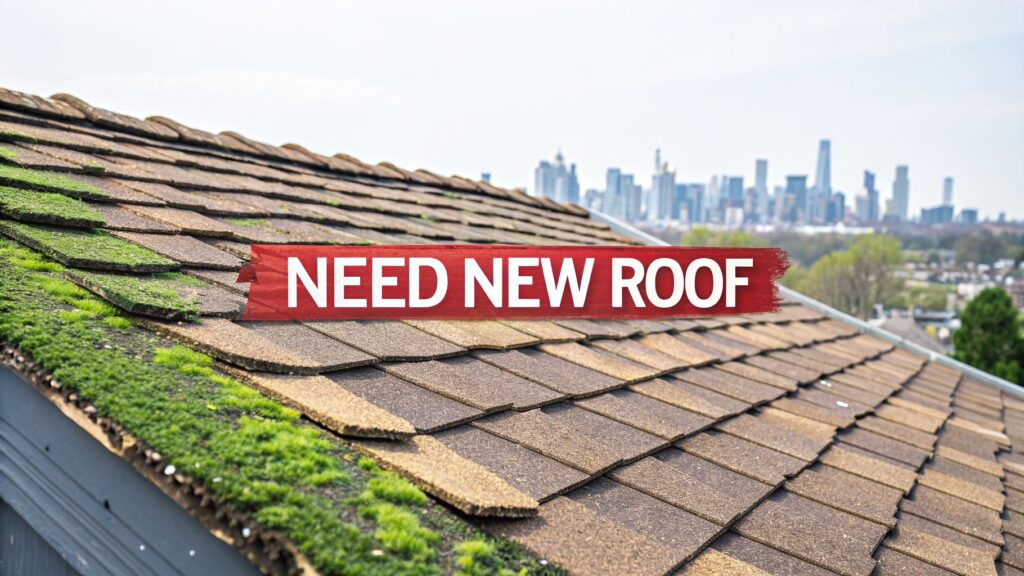
Signs You Need a New Roof: 8 Critical Clues for Dallas-Fort Worth in 2026
Your roof is your home's first line of defense, but it doesn't last forever, especially under the Texas sun and seasonal storms. Ignoring the subtle warnings it sends can lead to costly interior damage, structural issues, and emergency repairs down the line. But how do you know when a few missing shingles are a minor issue versus one of the critical signs you need a new roof? The difference between a simple repair and a full replacement often comes down to recognizing these indicators early.
This guide breaks down the eight most important signs, from obvious leaks and storm damage to less-visible clues like granule loss and failing flashing. We'll provide a practical checklist to help you assess your roof's health, understand the severity of each issue, and know when it's time to call in a professional. For a high-level overview without climbing a ladder, considering professional drone inspection services can offer a safe and detailed view of your roof's condition. For homeowners and property managers in Dallas-Fort Worth and East Texas, acting on these signs promptly can save you thousands and protect your most valuable asset.
1. Missing, Cracked, or Curling Shingles; Recent Hail and Storm Damage
Perhaps the most unmistakable and urgent signs you need a new roof are visible shingle damage and recent storm impact. Shingles serve as your home's primary armor against the elements. When they are missing, cracked, or curling, your home's waterproofing is compromised, leaving the underlying structure vulnerable to water intrusion, rot, and mold.

Why This Damage Matters
Different types of damage indicate distinct problems. For instance, curling or cupping shingles often signal that the materials have reached the end of their functional lifespan, typically 15-25 years for standard asphalt. Conversely, missing or cracked shingles are frequently the direct result of high winds or hail impact. After the spring 2024 hailstorms in Dallas-Fort Worth, many homeowners with otherwise healthy roofs found themselves needing full replacements due to widespread, severe impact damage. Even durable Class 3 shingles can sustain damage after repeated hailstorms, highlighting the importance of regular post-storm inspections.
Key Insight: While age-related wear is gradual, storm damage is sudden and often severe. Documenting it immediately is crucial for a successful insurance claim.
Actionable Steps After a Storm
If you suspect storm damage, acting quickly is vital to protect both your property and your potential insurance coverage.
- Document Everything: Immediately take clear photos and videos of the damage from a safe vantage point. Capture close-ups of cracked or dented shingles and wider shots showing missing sections.
- Request a Professional Assessment: Do not attempt to climb on a potentially unsafe roof. Contact a licensed inspector, like Hail King Professionals, for a free same-day inspection to determine the extent of the damage and whether a repair or full replacement is necessary.
- Contact Your Insurer: Notify your insurance company promptly to start the claims process. Having a professional inspection report will provide essential documentation.
Understanding the proper steps is critical. You can learn more about navigating the storm damage insurance claim process to ensure you're fully prepared.
2. Water Stains or Leaks in Attic and Interior Ceilings
While exterior damage is a clear indicator, some of the most critical signs you need a new roof appear inside your home. Water stains on ceilings, damp spots in the attic, or active drips are definitive proof that your roof's waterproofing system has failed. This isn't just a cosmetic issue; it's a direct threat to your home's structural integrity, insulation, and air quality.
Why This Damage Matters
Interior water damage signals that a problem has been present long enough for moisture to penetrate the roofing material, underlayment, and decking before reaching your living space. Causes range from missing shingles and deteriorated flashing to ice dams or failed pipe boot seals. In the humid climate of East Texas, even a small, slow leak can quickly lead to widespread mold growth and rotted framing over a single wet winter season. Similarly, many Dallas-Fort Worth homeowners discover attic water damage only after a severe spring thunderstorm, revealing a vulnerability that requires immediate attention.
Key Insight: An interior leak is the final symptom of a larger roofing problem. By the time you see a stain, the underlying damage to insulation, decking, and framing could already be significant.
Actionable Steps After Discovering a Leak
Finding a water stain or active leak demands an urgent response to minimize damage and address the root cause effectively.
- Document the Evidence: Immediately photograph the stains, drips, and any visible mold on ceilings or in the attic. This documentation is vital for your insurance claim.
- Request an Emergency Inspection: The source of a leak is not always directly above the stain. Contact a professional, like Hail King Professionals, for an emergency leak diagnostic to pinpoint the failure point and assess the extent of the water intrusion.
- Perform Temporary Mitigation: If safe to do so, place a bucket to catch active drips and clear valuable items from the area to prevent further damage while you await professional help.
It’s important to understand the correct procedures when facing this issue. You can discover more about what to do if your roof is leaking to ensure you take the right steps to protect your home.
3. Sagging, Soft Spots, or Visible Structural Damage
Among the most critical signs you need a new roof, a sagging or bowed roofline is an undeniable emergency. This structural deformation indicates a severe failure in the roof's support system, often caused by prolonged water exposure, rotted decking, or compromised framing. Ignoring it presents a significant safety hazard, including the potential for a catastrophic collapse.
Why This Damage Matters
A sagging roof is more than a cosmetic issue; it's a symptom of a deep-seated structural problem. In many Dallas-Fort Worth homes, this can be the result of years of moisture intrusion that has weakened the underlying sheathing and trusses. Commercial flat roofs are also susceptible, as ponding water can add immense weight, leading to deflection and eventual failure. This level of damage almost always requires a full roof replacement, plus extensive structural repairs to ensure the home is safe and sound.
Key Insight: A sagging roof is not a repairable issue; it is a clear signal that the structural integrity of your roofing system is compromised and requires immediate, expert intervention.
Actionable Steps for Structural Concerns
The safety risk associated with a sagging roof cannot be overstated. Proceed with extreme caution and prioritize professional help.
- Do Not Walk on the Roof: Stay off the roof entirely. Walking on soft or sagging areas could lead to a collapse, causing serious injury.
- Call for an Emergency Inspection: Contact a qualified roofing professional immediately for an emergency assessment. They can safely evaluate the extent of the structural failure.
- Consult a Structural Engineer: For significant sagging, an assessment from a structural engineer may be necessary to design the required repairs for the underlying decking and framing.
- Plan for Structural Repairs: When getting quotes, ensure they include a detailed scope of work covering not just the new roof materials but all necessary decking, truss, and framing repairs.
4. Granule Loss and Worn Shingle Surface
If you notice an excessive amount of coarse, sand-like material in your gutters and downspouts, you're seeing one of the most common signs you need a new roof: granule loss. These small ceramic-coated granules are embedded in asphalt shingles to protect them from UV radiation and weathering. When they wear away, the shingle’s asphalt core becomes exposed, drastically accelerating its deterioration and reducing its lifespan.

Why This Damage Matters
Granule loss is a direct indicator of an aging roof. Over time, the bond holding the granules weakens due to exposure to sun, rain, and temperature fluctuations. In the intense Texas sun, south-facing roof slopes often show accelerated loss, appearing shiny or "bald" compared to other sections. While a small amount of granule shedding is normal for new roofs (often called "nesting granules"), significant accumulation after 15-20 years means the shingles are losing their protective layer and are highly susceptible to cracking and water penetration.
Key Insight: Significant granule loss is your roof's way of telling you its primary defense against the sun is gone. Ignoring this sign leaves the shingle's asphalt core vulnerable to rapid decay.
Actionable Steps for Granule Loss
When you spot this issue, proactive planning is your best defense against future leaks and costly interior damage.
- Check Gutters and Downspouts: After a heavy rain, inspect your gutters for dark, sand-like deposits. A handful of granules indicates a problem; a large accumulation is a clear warning sign.
- Photograph the Evidence: Take clear pictures of the granules in your gutters and any "bald" spots on the shingles. This documentation is useful for tracking the roof's condition over time.
- Plan for Replacement: Widespread granule loss is not something that can be repaired. It signals that a full roof replacement will be necessary within the next few years. Start budgeting and researching reputable roofing contractors.
- Consider Upgrades: When you do replace your roof, consider upgrading to more durable materials like Class 4 impact-resistant shingles or metal roofing, which offer superior longevity in the DFW climate.
5. Flashing Deterioration and Gaps Around Roof Penetrations
While shingles cover the broad surfaces of your roof, flashing is the critical metal component that protects the most vulnerable areas: the seams and joints. Placed around chimneys, skylights, vents, and wall intersections, flashing directs water away from these penetrations. When it rusts, cracks, or pulls away, it creates a direct path for water to enter your attic and home, making it one of the most common sources of leaks.
Why This Damage Matters
Flashing failure is a sneaky but severe problem. Unlike widespread shingle damage, a small gap in flashing can go unnoticed for months while causing significant water damage. In the intense Dallas-Fort Worth heat, the constant expansion and contraction of metal can cause sealant to crack and flashing to shift over time. For example, many homeowners with 10-year-old roofs first notice leaks around their chimney, not due to shingle failure, but because the original builder-grade flashing and caulk have degraded. On commercial properties, corroded flashing around HVAC units is a frequent cause of costly interior water damage.
Key Insight: A roof is only as strong as its weakest point. Failing flashing compromises the entire system, even if the shingles are in good condition.
Actionable Steps for Flashing Maintenance
Proactively inspecting and maintaining your flashing can prevent major repairs down the line. It's a key part of identifying signs you need a new roof before a small issue becomes a catastrophe.
- Perform Visual Checks: From the ground, use binoculars to inspect the flashing around your chimney, vents, and skylights. Look for signs of rust, corrosion, or any visible gaps between the flashing and the roofing material.
- Check Sealants: The caulk or sealant used around flashing has a shorter lifespan than the metal itself. If it appears cracked, dried out, or is pulling away, it needs to be replaced immediately to restore the waterproof seal.
- Request a Detailed Assessment: During any professional roof inspection, ask the contractor to pay special attention to all flashing and penetrations. A qualified roofer can identify subtle separation or improper installation that isn't visible from the ground.
6. Age of Roof (15–25 Years) and Warranty Expiration
While sudden storm damage is an obvious trigger for roof replacement, one of the most reliable yet overlooked signs you need a new roof is its age. Most standard asphalt shingle roofs are designed to last between 15 and 25 years. In high-UV, hail-prone regions like Dallas-Fort Worth, that lifespan often trends toward the lower end of the range, making age a critical factor in your home maintenance planning.
Why This Damage Matters
Over time, the protective asphalt and granules on shingles degrade from constant exposure to sun, rain, and temperature fluctuations. This process causes them to lose their flexibility and waterproofing capabilities, even if they don't show dramatic signs of damage like curling or cracking. A 20-year-old roof is significantly less resilient to hail and high winds than a 5-year-old one. Many homes built in the Dallas suburbs during the early 2000s are now reaching this critical age, making their roofs prime candidates for failure during the next major storm.
Key Insight: Proactive replacement planning based on age can prevent the catastrophic failure of an old roof during a storm, saving you from interior water damage and emergency repair costs.
Actionable Steps for an Aging Roof
If your roof is approaching or has passed the 15-year mark, it’s time to move from a reactive to a proactive mindset.
- Confirm the Installation Date: Check your home purchase documents or city permits to find the exact installation date. If you can't find it, a professional inspector can estimate the age based on material condition.
- Schedule a Mid-Life Inspection: At year 15, request a professional assessment to evaluate its remaining functional life. This gives you a clear timeline for budgeting and planning.
- Plan for Replacement: Once your roof hits 18-20 years, begin actively planning for a replacement, even if visible damage is minimal. Waiting for a leak to appear is a costly mistake.
Understanding your roof's expected longevity is key. You can learn more about how long a new roof should last in North Texas to better prepare for the future.
7. Mold, Moss, Algae Growth, or Dark Streaks
While those dark streaks or patches of green on your roof might seem like a simple cosmetic issue, they are often symptoms of a deeper problem. Biological growth like algae (dark streaks), moss (green clumps), or mold indicates that your roof is retaining excessive moisture, which accelerates the deterioration of your shingles and the underlying structure.
Why This Growth Matters
Different types of growth point to specific environmental and roofing conditions. The common black streaks, known as Gloeocapsa magma, feed on the limestone filler in asphalt shingles, breaking down the material over time. Moss is even more destructive; its root-like structures can lift shingles, creating entry points for water. This is particularly prevalent in the humid, shaded environments often found in East Texas, where heavy tree cover can trap moisture on a roof's surface. While professional cleaning can temporarily solve the aesthetic problem, persistent regrowth signals that the core issues of poor drainage, inadequate sunlight, or failing shingle integrity remain.
Key Insight: Recurring biological growth is not just a stain; it’s a clear indicator that your roof is holding moisture, which is the primary enemy of any roofing system.
Actionable Steps to Address Growth
Properly addressing roof growth involves more than just cleaning; it requires a strategic approach to eliminate the conditions that allow it to thrive.
- Correct the Root Cause: Trim overhanging tree limbs to allow more sunlight and airflow, which helps the roof dry out faster after rain. Ensure gutters are clean and functioning correctly to prevent water from backing up onto the shingles.
- Opt for Safe Cleaning: Never pressure-wash your roof, as this can strip away protective granules and cause severe damage. Instead, seek a professional soft-wash service that uses low-pressure techniques and manufacturer-approved cleaning solutions.
- Consider Preventative Measures: For a new roof, ask about shingles with built-in algae resistance or the installation of zinc or copper strips along the roof ridge. These metals slowly leach particles that inhibit future growth.
- Evaluate for Replacement: If growth returns quickly after a professional cleaning, it's one of the more subtle signs you need a new roof. The shingles may be too porous and worn to resist moisture effectively, making replacement the only long-term solution.
8. Damaged or Missing Gutters and Downspouts
While not part of the roof surface itself, your gutter system is a critical component of your home's overall water management plan. Damaged, clogged, or sagging gutters fail to properly direct water away from your roofline and foundation. This failure is one of the more subtle signs you need a new roof, as persistent water exposure along the eaves can accelerate the deterioration of fascia, soffit, and the roof decking itself.
Why This Damage Matters
A functional gutter system protects more than just your roof. When gutters pull away from the home, overflow, or direct water back toward the structure, they create a cascade of problems. In many Dallas-Fort Worth homes, sagging gutters allow water to pool against the fascia board, causing rot that extends to the roof’s edge. Over time, this moisture intrusion compromises the structural integrity of the roof decking, leading to soft spots and eventual leaks inside your home. Similarly, downspouts that discharge too close to the house can saturate the soil, leading to costly foundation issues.
Key Insight: A failing gutter system is often a precursor to roof damage. Addressing both simultaneously is the most cost-effective way to ensure a complete and lasting water management solution.
Actionable Steps for Gutter Maintenance
Proactive maintenance and timely replacement are essential for protecting your roof and foundation from water damage.
- Inspect and Clean Regularly: Check your gutters and downspouts at least twice a year, typically in the spring and fall. Remove leaves, twigs, and other debris that can cause clogs and overflows.
- Check for Proper Slope and Security: Ensure your gutters are sloped correctly toward the downspouts and are securely attached to the fascia. Look for any signs of sagging, pulling away, or rust.
- Coordinate with Roof Replacement: If you are planning a roof replacement, it is the perfect time to assess and replace your gutters. Installing a new, seamless system with your new roof guarantees optimal performance and protects your investment.
8-Point Comparison: Signs You Need a New Roof
| Issue | Implementation complexity | Resource requirements | Expected outcomes | Ideal use cases | Key advantages |
|---|---|---|---|---|---|
| Missing, Cracked, or Curling Shingles; Recent Hail and Storm Damage | Low–Moderate (patches easy; widespread needs reroof) | Roofer, replacement shingles or impact-resistant upgrades, documentation for insurer | Restored waterproofing; possible partial or full replacement; insurance recovery | Visible impact, missing or cracked shingles after storms | Easy to identify; often insurance-covered; upgrade opportunity |
| Water Stains or Leaks in Attic and Interior Ceilings | Moderate–High (diagnosis + roof and interior repairs) | Roofer, moisture testing, mold remediation, drywall repair | Leak stopped, interior repaired, mold mitigated | Active leaks, ceiling stains, attic moisture | Clear interior evidence prompting urgent action; claimable |
| Sagging, Soft Spots, or Visible Structural Damage | High (structural assessment and significant repairs) | Structural engineer, emergency shoring, decking/truss replacement, full reroof | Structural stabilization and full roof replacement; safety restored | Sagging roofline, soft spots underfoot, pooled water | Unambiguous safety-critical sign; usually requires replacement |
| Granule Loss and Worn Shingle Surface | Low (inspection and planned replacement or coating) | Roof inspection, possible coatings, eventual shingle replacement | Proactive replacement planning; extended life with coatings | Excess granules in gutters, shiny or bald shingles | Noninvasive aging indicator; allows budgeting and timing |
| Flashing Deterioration and Gaps Around Roof Penetrations | Low–Moderate (localized but precise work) | Skilled roofer, quality metal flashing, sealants, possible resealing at multiple penetrations | Restored watertight seals; often avoids full reroof if isolated | Leaks near chimneys, vents, skylights; visible gaps or rust | Often more affordable than full replacement; prevents interior damage |
| Age of Roof (15–25 Years) and Warranty Expiration | Low (planning and inspection; scheduled replacement) | Inspection, replacement budgeting, selection of new materials | Proactive replacement with new warranty and improved materials | Roofs at or approaching 15–20 years or expired warranties | Enables budgeting and upgrades; avoids emergency failures |
| Mold, Moss, Algae Growth, or Dark Streaks | Low–Moderate (cleaning and addressing moisture causes) | Professional low-impact cleaning, ventilation fixes, tree trimming, zinc/copper strips | Improved appearance; reduced deterioration; possible replacement if recurring | Shaded, humid slopes with biological growth or dark streaks | Manageable with maintenance; early treatment prevents escalation |
| Damaged or Missing Gutters and Downspouts | Low–Moderate (repair/replace and ensure proper drainage) | Gutter contractor, replacement/downspouts, proper slope and discharge | Restored drainage; reduced roof edge and foundation damage | Sagging, clogged, or missing gutters; overflow during rain | Cost-effective prevention; extends roof and foundation longevity |
Your Next Steps for a Secure and Reliable Roof
Recognizing the subtle and overt signs you need a new roof is the most critical step in safeguarding your home or commercial property. Throughout this guide, we've detailed the specific symptoms of a failing roof, from the obvious missing shingles and interior water stains to the less apparent granule loss and flashing deterioration. Each sign tells a story about your roof's health, its ability to withstand the harsh Texas weather, and its remaining lifespan.
The true value of this knowledge lies not just in identification, but in action. A small patch of curled shingles or a minor dark streak on the ceiling may seem insignificant today, but these are often early warnings of much larger, more expensive problems on the horizon. Ignoring them is a gamble against time and the next severe storm. In the Dallas-Fort Worth and East Texas regions, where hail, high winds, and intense sun are common, a compromised roof can quickly lead to catastrophic structural damage, mold infestations, and ruined interiors.
Translating Knowledge into Proactive Measures
Your roof is more than just a cover; it's a complex system that protects your most significant investment. The most important takeaway is that a proactive approach is always more effective and affordable than a reactive one. Waiting for a complete failure is a recipe for emergency repairs, stressful insurance claims, and potential displacement.
Here are the immediate, actionable steps you should take:
- Conduct a Safe Self-Assessment: Use the DIY checklist provided earlier to perform a ground-level and, if safe, a closer inspection. Document any concerning areas with clear photographs.
- Schedule a Professional Inspection: This is the definitive next step. A trained expert can identify hidden damage, assess the structural integrity, and provide a clear, unbiased evaluation. They can distinguish between a roof that needs a simple repair and one that requires a full replacement.
- Review Your Insurance Policy: Understand your coverage for storm damage, especially hail and wind. Having this information ready will make the claims process much smoother if damage is confirmed.
- Consider Long-Term Maintenance: Once your roof is repaired or replaced, preventative care becomes essential. For instance, looking into professional roof spraying services can help inhibit the growth of algae and moss, which is a common issue in East Texas, thereby extending the life of your new shingles.
Ultimately, investing in a sound, reliable roof provides more than just shelter. It offers peace of mind, preserves your property's value, and ensures the safety and comfort of everyone inside. By taking these signs seriously and acting decisively, you are making a crucial decision to protect your home's future.
Don't let roof worries linger. The team at Hail King Professionals specializes in identifying these critical signs and providing transparent, expert solutions for homeowners across DFW and East Texas. Contact Hail King Professionals today for a free, no-obligation inspection to get a clear picture of your roof's health and a reliable plan for its future.