


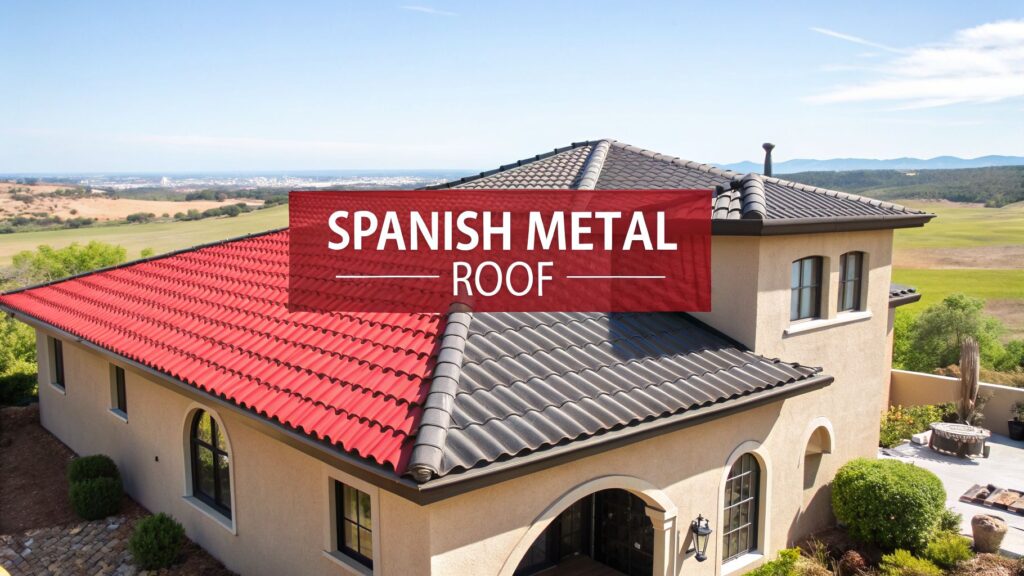
Spanish Metal Tile Roofing A Guide for Texas Homeowners
For many Texas homeowners, the classic look of a Spanish tile roof is the absolute peak of curb appeal. That beautiful, rolling, "S"-shaped profile brings to mind Mediterranean villas and timeless architecture. But traditional clay or concrete tiles? They come with a whole lot of baggage—literally. They're incredibly heavy, fragile, and often require expensive structural reinforcement to even support their own weight.
This is where Spanish metal tile roofing changes the game completely.
What Exactly Is Spanish Metal Tile Roofing?
Think of it like this: you get all the stunning visual appeal of classic clay tiles but with the brawn and resilience of modern, high-performance steel. It’s the best of both worlds, engineered specifically for the tough Texas climate.

Instead of being formed from heavy, breakable clay, these roofing panels are stamped from high-strength, 26-gauge galvanized steel. This switch in materials is a massive upgrade. The roof is dramatically lighter, which means most homes can handle it without needing a costly, engineered overhaul of their roof structure. It’s a smart solution that delivers that historic, elegant look without the historic headaches.
More Than Just a Pretty Roof
While the head-turning looks are what first catch your eye, the real story is in the performance. This isn't just a cosmetic choice; it's a fortress for your home. These metal tile systems are built from the ground up to laugh off the worst weather Texas can throw at them.
Each panel is protected by advanced coatings, like the industry-leading Kynar 500, which fight off decades of brutal UV exposure without fading and prevent corrosion from our humid air.
The real-world benefits stack up quickly:
- Timeless Style: It’s a perfect match for Spanish, Mediterranean, and even modern ranch-style homes looking for an architectural upgrade.
- Lightweight Strength: Because it’s so much lighter than clay, it's a practical choice for a much wider range of homes.
- Engineered for Texas: It’s designed and tested to stand up to hail, high winds, and intense heat, giving you peace of mind that goes way beyond looks.
Choosing a Spanish metal tile roof is more than just a style upgrade—it's a one-and-done investment in your home's protection and value. You're getting a permanent roofing solution that solves the problems of hail, wind, and sun, keeping your home safe and beautiful for decades to come. For any homeowner who values both classic style and modern-day resilience, it's an incredibly compelling choice.
Built to Handle the Worst Texas Weather
Here in Texas, a roof isn't just a roof. It’s your home's primary shield against some of the most punishing and unpredictable weather you'll find anywhere. This is where a Spanish-style metal tile roof really shows its true colors, going far beyond curb appeal to offer serious, engineered protection. More and more homeowners are choosing it not just for the look, but for the genuine peace of mind it brings when the sky turns dark.
The secret is in how it's made. Forget about fragile clay tiles that can shatter on impact or asphalt shingles that get ripped off by high winds. Spanish metal tile is built for a fight. Think of it as a custom-forged shield of high-strength steel, engineered to deflect the very forces that would destroy lesser materials.
This isn't just talk; it's backed by serious industry testing. When you hear that a roof has a Class 4 impact rating, it means it’s been put through the wringer in a lab. To pass, it has to withstand a 2-inch steel ball being dropped on it from 20 feet—without cracking.
To put that in perspective, a Class 4 rating is the highest seal of approval for impact resistance a residential roof can get. It’s the lab-tested equivalent of your roof shrugging off hailstones the size of billiard balls. That’s the kind of Texas-sized hail that turns traditional roofs into a pile of rubble and leads to devastating leaks.
What does that mean for you? Fewer repairs, a lot less anxiety during storm season, and a massive drop in the likelihood you'll be filing an insurance claim. It’s an investment in keeping your home and family safe, year after year.
Standing Strong Against Hail and High Winds
Texas weather throws a little bit of everything at us—blistering sun, violent hail, and winds that feel like they belong in a hurricane. A Spanish metal tile system is engineered from the ground up to take it all. The performance numbers speak for themselves.
- Unbeatable Hail Resistance: That Class 4 rating is your best friend when the hail starts falling. While a monster storm might leave a few cosmetic dings, it won’t cause the kind of functional damage—like cracking, splitting, or granule loss—that sends asphalt and clay to an early grave. Your roof’s integrity holds strong.
- Serious Wind Uplift Ratings: These systems are often rated to withstand winds well over 140 mph. They achieve this with smart, interlocking panels and a heavy-duty fastening pattern that locks every tile to the roof deck, creating a single, unified barrier against the wind.
- Class A Fire Rating: Simple but critical: metal doesn't burn. This gives you the highest level of fire protection available, a huge advantage in areas prone to dry, wildfire-friendly conditions.
This idea isn't new. The concept of pressed steel roofing has been refined for over a century, combining a lightweight design with incredible strength. Spanish manufacturers perfected the art of pressing steel to look like terracotta way back in the 19th century. By 1920, they were shipping these lighter alternatives all over the world, cutting roof weights by up to 70% compared to traditional clay. That legacy of innovation is alive and well today in places like Dallas-Fort Worth, where a Class 4 impact rating is a non-negotiable feature for any homeowner who’s serious about protection.
A Surprisingly Quiet and Secure Roof
Let's clear up a common myth: the noise. The old "ping, ping, ping" of rain on a tin roof? That’s an image from an old barn with no insulation. A modern Spanish metal tile roof is a completely different animal.
These systems are installed over your home's solid roof deck and a high-quality underlayment, which immediately acts as a sound-dampening buffer. Once you factor in your attic and insulation, the sound of rain or even hail is a dull, quiet thud—often much quieter than you'd hear with standard asphalt shingles. You get all the protection without the racket, so your home stays a peaceful retreat, even in the middle of a storm.
If you want to dive deeper, you can learn more by reading our complete guide on hail-resistant roofing materials.
Comparing Your Best Roofing Options Side-By-Side
When it's time for a new roof, you're making a huge decision for your home. Here in Texas, that choice directly impacts everything from your family's safety and your home's curb appeal to those monthly energy bills. To make the right call, you need to see exactly how your options stack up.
Let's put Spanish metal tile roofing head-to-head with its main rivals: traditional clay, concrete tiles, and the ever-common architectural asphalt shingles. This isn't just about looks. It's about figuring out the true cost of ownership, how tough each material really is, and how it'll hold up to the wild weather we get in Texas. A roof that looks like a bargain upfront can turn into a money pit of constant repairs and early replacement down the road.
A Clear Look at Performance and Value
The perfect roof for your home is a balance of several critical factors. We’re talking about its lifespan, its weight, how it handles a hailstorm, the maintenance it demands, and what it’s really going to cost you over the long haul.
A smarter way to think about it is "cost per year of service" instead of just the initial price tag. A metal roof with a 50+ year lifespan might cost more on day one, but it easily outlasts an asphalt roof you’d have to replace two, or even three, times over that same period. That long-term view is where you find the real value.
This infographic breaks down the weather resistance metrics that every Texas homeowner should be thinking about.

It’s easy to see the superior engineering that goes into modern metal roofing, designed specifically to stand up to our state's toughest storms.
The Weight Advantage of Spanish Metal Tile
One of the most important—and most overlooked—factors is the sheer weight of a roofing system. Your home's entire structure has to support that load, and there are massive differences between materials.
- Traditional Clay & Concrete: These are absolute heavyweights, often weighing in at a staggering 900 to 1,200 pounds per square (a 10×10 foot area). Many homes, particularly older ones, simply weren't built to handle that kind of load without expensive structural reinforcement.
- Spanish Metal Tile: By comparison, a Spanish metal tile system is a featherweight, tipping the scales at just 100 to 150 pounds per square. This massive weight reduction means it can be installed on nearly any home without needing costly engineering reports or beefing up the structure.
This isn't just about saving money on structural work. A lighter roof puts far less stress on your home's foundation and framing day in and day out. It’s a huge benefit for the long-term health of your property and makes that beautiful Spanish style accessible to way more homeowners.
Side-By-Side Roofing Material Breakdown
To make this all crystal clear, let’s lay out the key differences in a simple, side-by-side comparison. The table below cuts right to the chase on the features that matter most to Texas homeowners.
Here is a straightforward look at how the top roofing choices compare on the metrics that count.
Roofing Material Comparison For Texas Homes
| Feature | Spanish Metal Tile | Traditional Clay Tile | Concrete Tile | Architectural Asphalt |
|---|---|---|---|---|
| Expected Lifespan | 50-70+ years | 50-100+ years | 40-75 years | 15-25 years |
| Weight (per 100 sq ft) | 100-150 lbs | 900-1,200 lbs | 950-1,200 lbs | 250-400 lbs |
| Hail Rating | Excellent (Class 4) | Poor (Brittle) | Fair (Can Crack) | Good (Class 3-4) |
| Wind Rating | 140+ mph | Good | Good | 110-130 mph |
| Maintenance Needs | Very Low | Moderate (Cracks) | Low to Moderate | High (Granule Loss) |
| Long-Term Value | Excellent | Good | Good | Fair |
This table makes the advantages pretty clear. While traditional clay and concrete offer a long life, they come with the huge downsides of extreme weight and being prone to shattering. Asphalt is cheaper at the start, but its short lifespan means you’ll be paying for a new roof all over again much sooner.
Spanish metal tile roofing really hits that sweet spot. You get an exceptional lifespan, the highest Class 4 impact resistance against hail, elite wind performance, and a lightweight profile. It's simply a smarter investment for protecting your Texas home. To see how these materials work within a complete system, take a look at our guide to the different roofing system types.
Understanding the Cost and Long-Term Value
When you’re thinking about a major home improvement like a new roof, the conversation always comes back to one thing: cost. Let’s be upfront—a Spanish metal tile roof costs more out of the gate than common materials like asphalt shingles.
But just looking at the initial price tag is like judging a book by its cover. It's far more accurate to see it as a smart, long-term investment in your home's protection, curb appeal, and overall value. The higher cost reflects the top-tier materials and advanced engineering needed to create a truly permanent roofing solution.
Think of it this way: an asphalt roof is a temporary patch you'll have to pay for again and again. A metal roof is designed to be the last roof your home will ever need. This completely changes the financial question from "What does it cost today?" to "What's the real cost per year over its lifetime?"
Breaking Down the Price Factors
The final quote for your Spanish metal tile roof will depend on a few key variables. Knowing what these are helps you understand exactly where your money is going and why it matters for performance.
Here are the main cost drivers:
- Steel Gauge and Quality: The thickness of the steel, typically 26-gauge, is a huge factor in its strength. Thicker, higher-quality steel provides much better resistance to dents from hail and other impacts.
- Protective Coatings: This is where the magic happens. High-end finishes like Kynar 500 are engineered to fight off fading, chalking, and corrosion for decades. This is what keeps your roof looking vibrant and new, not faded and worn out.
- Roof Complexity: A simple, straight-shot gable roof is going to be less expensive than a complex roof full of valleys, dormers, and steep pitches. Those intricate rooflines demand more skilled labor and custom-fabricated materials to get right.
When you invest in these components, you’re not just buying a roof covering; you’re getting a complete high-performance system built to last.
The Real Return on Investment Over Decades
The true financial genius of a Spanish metal tile roof becomes crystal clear when you zoom out and look at its lifespan. These roofs are built to last 50 to 70 years—or even longer.
Compare that to an asphalt shingle roof, which might survive 15 to 25 years in the brutal Texas climate. You'd likely pay to replace an asphalt roof two, or even three, times within the lifespan of a single metal roof.
This long-term mindset is where history meets modern value. The industrialization of metal roofing created a massive global market, which is now projected to grow from $213.76 billion in 2023 to $280.29 billion by 2029. For us here in Texas, that means we get access to incredibly refined products with proven durability against everything our weather throws at them, from blistering sun to hurricane-force winds. You can discover more insights about the growing roofing market and see how this evolution benefits homeowners directly.
But the savings go beyond just durability and pop up in your monthly budget.
A Spanish metal tile roof isn't just a cost—it's an asset that pays you back. By dramatically reducing repair costs, lowering energy bills, and potentially cutting insurance premiums, it actively contributes to your home's financial health over its entire lifetime.
Unlocking Savings on Insurance and Energy
The financial perks don't stop at avoiding replacement costs. A metal tile roof can lead to some serious savings every single year, which is especially important here in Texas.
- Home Insurance Discounts: Most Spanish metal tile roofs earn a Class 4 impact rating, which is the highest possible. Because these roofs drastically lower the risk of expensive hail damage claims, many Texas insurance companies offer significant premium discounts for homes that have them.
- Lower Cooling Costs: These systems are "cool roofs." They have special reflective coatings that bounce the sun's heat away from your house instead of absorbing it. This keeps your attic from turning into an oven, which can slash your air conditioning costs by up to 30% during our sweltering summers. That's a huge annual saving that really adds up over the years.
When you factor in these ongoing savings, the upfront investment starts to make a lot more sense. You’re not just buying a beautiful, strong roof; you’re investing in a system that actively lowers your cost of homeownership for decades to come.
Finding a Qualified Roofing Contractor in Texas
Let's be blunt: a high-performance Spanish metal tile roof is only as good as the crew that installs it. You can pick the best materials on the market, but if they aren't installed by a skilled professional who truly understands these systems, you're setting yourself up for failure. In a market as crowded as Texas, finding that right partner is the most critical step you'll take in protecting your investment.

The stakes couldn't be higher. A botched installation can lead to persistent leaks, instantly voided warranties, and even a complete roof failure years ahead of schedule. Your dream upgrade can quickly become a costly, long-term nightmare. This is why vetting your contractor isn't just a casual suggestion—it's an absolute must for any homeowner who's serious about getting it right the first time.
Non-Negotiable Contractor Qualifications
Before you even glance at a price tag, make sure any potential contractor meets a few fundamental standards. Think of these as the absolute baseline—the credentials that protect you, your home, and your wallet from disaster.
Here’s your initial checklist:
- Proper Licensing and Insurance: Any legitimate Texas roofer will have both general liability insurance and workers' compensation. Don't just take their word for it—ask to see the certificates. This is what protects you from any liability if a worker gets hurt on your property.
- Manufacturer Certifications: The best manufacturers of Spanish metal tile systems don't let just anyone install their products. They offer specialized training, and a certified contractor has proven they know the system inside and out. This is often a hard requirement to keep your warranty valid.
- Local Experience and Reputation: Look for a company with deep roots in your specific area, whether it's DFW or East Texas. A long-standing local presence means they have a reputation to protect and they understand the specific weather challenges we face.
When you're ready to find help for your project, it's vital to seek out qualified roofing professionals who can confidently check all these boxes.
Never hire a contractor based on price alone. A suspiciously low bid is almost always a sign of cut corners, uninsured labor, or cheap, inferior materials. Those "savings" can end up costing you far more down the road.
Red Flags to Watch Out For
Just as important as knowing what to look for is knowing what to run from. Shady operators often rely on a few classic tricks to pressure homeowners into making a bad decision on the spot.
Be on high alert for any contractor who:
- Uses High-Pressure Sales Tactics: A true professional will give you a detailed quote and the time you need to make an informed choice. Anyone demanding you "sign now to lock in this special price" is a massive red flag.
- Offers Vague or Incomplete Quotes: Your estimate should be a detailed, line-by-line document spelling out specific materials, labor costs, and a clear project timeline. If all you get is a single number scribbled on a business card, walk away.
- Asks for a Large Upfront Payment: While a reasonable deposit is standard practice, demanding a huge chunk of the total cost before a single shingle has been delivered is often a sign of a financially unstable or dishonest company.
Essential Services for Modern Texas Homes
Today’s homes are more complex than ever. A truly full-service contractor needs to be able to handle the related exterior work to ensure your project goes off without a hitch.
One of the most critical services now is solar panel detach-and-reset. If you have solar, your roofer absolutely must have the expertise to safely remove the panels, execute the reroof, and then reinstall and reconnect them correctly. Having a team that can handle this in-house (or with a dedicated, trusted partner) prevents a world of scheduling headaches and finger-pointing between different companies.
Our guide on how to choose a roofing contractor dives deeper into finding a team that can manage these integrated projects seamlessly.
Dealing With Insurance and Keeping Your Roof in Top Shape
One of the biggest real-world benefits of a Spanish metal tile roof is how it changes the game with your homeowner's insurance. These roofs almost always carry a Class 4 impact rating—the highest available—which means they stand up to the kind of brutal hailstorms we see all too often in Texas. That incredible durability usually translates to a much simpler, and far less frequent, insurance claim process for you.
Of course, no roof is completely indestructible. In a truly severe storm, damage is still possible. If that happens, a good, professional roofing contractor becomes your best friend. They know exactly how to document everything with the clear photos and detailed notes that insurance adjusters need to see. This expert documentation is key to proving the extent of the damage and getting a legitimate claim approved without a bunch of back-and-forth.
This resilience is why these roofs are becoming so popular in storm-prone areas. Just look at the numbers: in Texas, hail damage claims shot past $3.5 billion in 2024 alone. It's no surprise we've seen a 25% jump in homeowners here switching to metal replacements. These systems are really setting a new standard for what a tough roof should be. If you're curious, you can explore more about the roofing market's shift toward these stronger materials.
A Common-Sense Approach to Maintenance
When you hear "50-year lifespan," it’s easy to think you can just forget about your roof entirely. And while a Spanish metal tile roof is about as low-maintenance as it gets, a little bit of proactive care makes a huge difference in ensuring it lasts every one of those 50 years.
Think of it less as a chore and more like a quick annual check-up to protect a major investment. A brief yearly inspection is usually all it takes to keep things in perfect working order. You don't need to be up there on a ladder yourself; a careful look from the ground with binoculars or a quick professional walkthrough is typically all you need.
A proactive mindset is all about catching small things before they have a chance to become big problems. A few minutes once a year can genuinely guarantee decades of performance from your home's most important shield.
Here’s a simple checklist to run through each year, either by yourself or with your contractor:
- Check Fasteners and Flashing: Make sure all the screws are tight and the metal flashing around chimneys, vents, and roof valleys is still sealed up properly. These are the most common spots for leaks on any roof.
- Clear Off Debris: Get rid of any leaves, twigs, or dirt that have piled up on the roof or in the gutters. This keeps water flowing freely and prevents it from pooling, which can cause trouble over time.
- Spot-Check for Scratches: Look for any deep scuffs or scratches in the paint finish from falling branches or other impacts. Touching these up early prevents any chance of corrosion down the road.
Your Top Questions About Spanish Metal Tile Roofs, Answered
Even with all the clear benefits, it's natural to have a few practical questions before deciding on a Spanish metal tile roof. It’s a big decision, and feeling confident means getting straight answers. Let's tackle some of the most common things we hear from homeowners across Texas.
These aren't just technical questions; they get to the heart of what it's like to actually live with one of these roofs day in and day out.
Are They Noisy When It Rains?
This is probably the biggest myth out there. Most people picture an old barn with a tin roof and imagine a deafening "ping, ping, ping" during a storm. The reality of a modern Spanish metal tile system couldn't be more different.
Remember, your roof isn't just a sheet of metal. It's a complete system installed over your home's solid wood decking, a layer of high-tech underlayment, and all the insulation in your attic. These layers work together to muffle sound beautifully. The noise you hear is a gentle, soft tapping—often even quieter than the sound of rain on standard asphalt shingles.
Will Spanish Metal Tile Work on My Style of Home?
Absolutely. In fact, this is one of its greatest strengths. Traditional clay or concrete tiles are incredibly heavy, but metal tile weighs 85-90% less. This is a game-changer because it means most homes can support it without needing expensive, complex structural reinforcements.
This huge weight difference opens up the classic Spanish look to a much wider range of homes. It's not just for Mediterranean villas anymore—it looks fantastic on modern ranches, contemporary builds, and even traditional homes that need a serious upgrade in curb appeal.
A good contractor can walk you through the profiles and colors that will best complement your home’s architecture, making sure the final result feels authentic and looks stunning.
What Are My Options for Colors and Finishes?
You're not just stuck with the classic terra cotta red (though we have that too!). The design possibilities are massive. Modern Spanish metal tiles come in a whole spectrum of colors—from earthy browns and deep greens to coastal blues and sleek, modern charcoals.
On top of color, you can choose the finish to dial in the perfect look:
- Smooth, Glossy Finishes: These give you a clean, vibrant look that really pops in the sunlight.
- Textured, Stone-Coated Finishes: This option provides a more granular, matte look that does an amazing job of mimicking the authentic texture of real clay.
These advanced coatings are designed with fade-resistant pigments, so you can be confident your roof’s color will stay rich and true for decades, even under the harsh Texas sun.
When you're ready to see how a Spanish metal tile roof can elevate your home's protection and style, trust the team with decades of Texas-specific experience. For a free, no-obligation inspection and a straightforward quote, contact Hail King Professionals today.
Learn more and schedule your free inspection at https://hailkingpros.com.