


Gutter Installation Dallas TX Your Ultimate Homeowner Guide
If you're a homeowner in North Texas, you know our weather is no joke. Getting a professional gutter installation in Dallas, TX isn't just another home improvement project; it's one of the most practical investments you can make. With our notorious hailstorms and sudden deluges, a well-built gutter system is the first line of defense protecting your home from some seriously expensive water damage.
Why Gutters Are a Critical Investment for Dallas Homes
Here in Dallas, the weather does more than just give us something to talk about—it actively works against our homes. From the pounding rains of spring to the hail that seems to come out of nowhere, your property is constantly under threat. That's why a properly installed gutter system isn't an accessory; it’s an absolute necessity.

Think of your gutters as your home’s silent guardians. During a typical North Texas storm, a good system will channel thousands of gallons of water safely away from your house. Without that crucial water management, the fallout can be both severe and costly.
Protecting Your Home’s Foundation
Most of the Dallas area is built on expansive clay soil, which is a real problem when it gets wet. When water is allowed to just pool around your foundation, the soil swells up and puts tremendous pressure on your home’s base. Over time, that pressure can lead to cracks, shifting, and major structural problems—repairs that can easily climb into the tens of thousands of dollars.
A professional gutter installation in Dallas, TX is designed to stop this. It collects all that rainwater and directs it through downspouts to a safe discharge point far from your house. This simple function keeps the moisture level in the soil stable, protecting your foundation’s integrity for years to come.
A single inch of rain on a 2,000-square-foot roof produces about 1,250 gallons of water. Your gutter system is tasked with handling this massive volume every single time it storms, making it absolutely essential for foundation protection.
Preventing Siding Damage and Landscape Erosion
It's not just your foundation at risk when water overflows from clogged or missing gutters. That water also runs straight down your home's siding, creating a cascade of issues that can tank your curb appeal and property value.
- Siding and Fascia Rot: Constant moisture will rot wood siding, fascia boards, and window frames, causing paint to peel and materials to break down.
- Ugly Stains: Runoff leaves behind streaks of dirt, mildew, and mineral deposits on your brick, stone, and siding, making your home look worn and neglected.
- Landscape Destruction: Uncontrolled water flow creates trenches in your flower beds, washes away expensive mulch, and can easily drown your plants and shrubs.
Poor water management isn't just an eyesore; it's a real threat to your property. That's why it's so important to consider expert drainage solutions for yards as part of a complete plan. A great gutter system is where it all starts.
To dig deeper into this, check out our guide on why a house needs gutters. Making the right choice on your installation is a key decision for your home's long-term health and your financial peace of mind.
Seamless Gutters Versus Sectional Gutters
When it's time for new gutters, one of the first choices you'll make is between seamless and sectional systems. From the ground, they might look pretty similar, but how they’re built and how they perform are night and day—especially here in North Texas where our weather puts everything to the test.
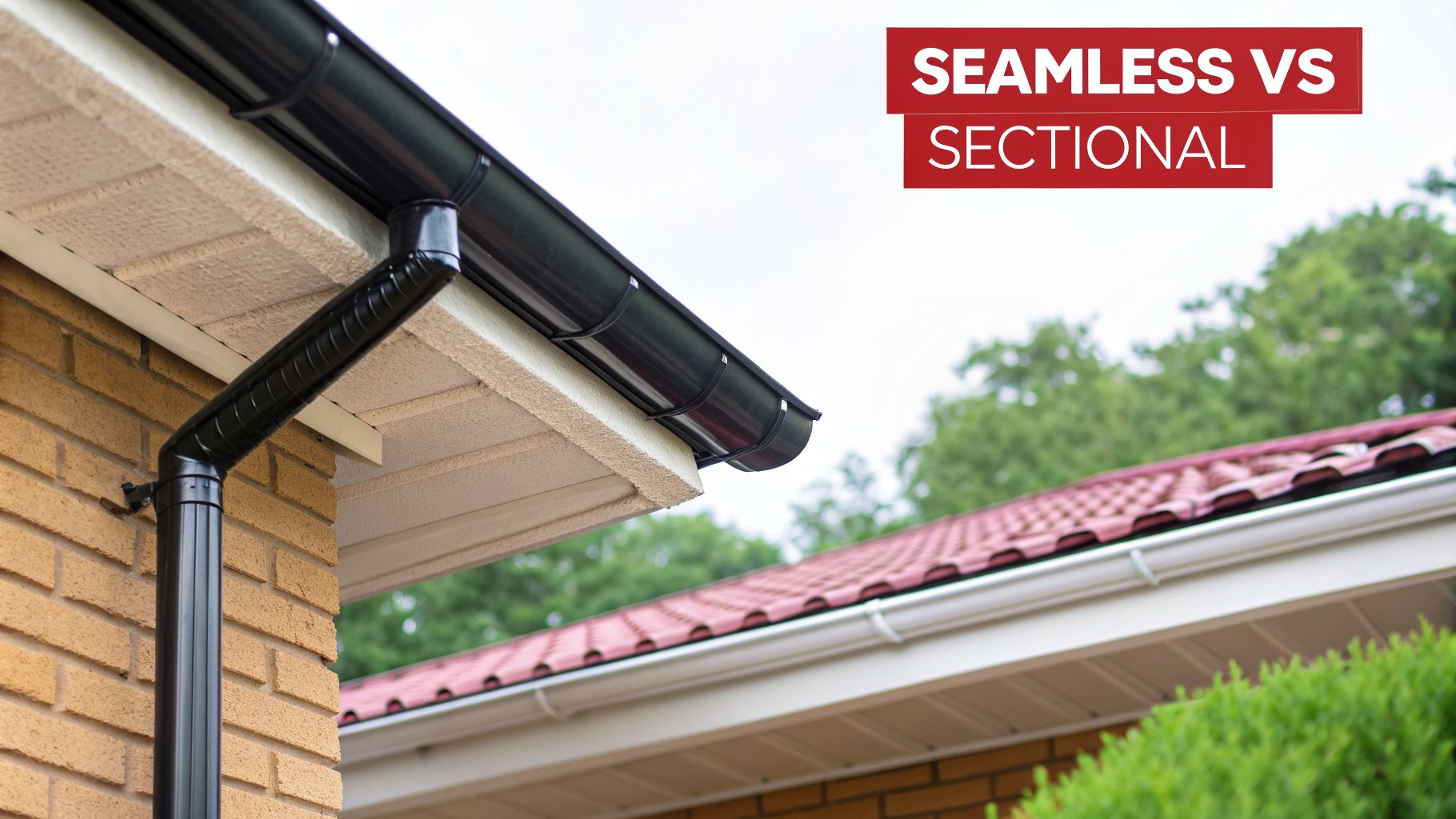
You’ve probably seen sectional gutters at big-box home improvement stores. They’re the traditional, DIY-friendly choice that comes in pre-cut pieces, usually 10 to 20 feet long. You piece them together on-site with connectors to match the length of your roof.
The concept is simple, but it creates a fundamental flaw. Every place where two sections connect is a seam, and every single seam is a weak point just waiting to fail.
The Problem with Sectional Gutters
In a place like Dallas, those seams are a huge liability. The intense summer heat causes materials to expand, and then they contract when it cools down. This constant movement puts stress on the sealant used at every joint, causing it to dry out, crack, and eventually give way. The result? Leaks. And leaks defeat the entire purpose of your gutter system.
It doesn't stop there. The small lip created by each internal seam is perfect for snagging leaves, pine needles, and other debris. This makes sectional gutters far more likely to clog up, leading to water overflowing and damaging your fascia, siding, and even your home's foundation. While the upfront cost might seem lower, you'll likely make up the difference in frequent repairs and cleaning down the road.
The Clear Advantage of Seamless Gutters
This is exactly why seamless gutters have become the industry standard for professionals. They aren't pieced together from a box. Instead, a contractor brings a specialized roll-forming machine right to your home and fabricates each gutter run on the spot.
We feed a flat coil of high-quality aluminum or steel into the machine, and it extrudes one long, continuous gutter custom-measured for your roof. If you have a 70-foot roofline, you get one solid, unbroken 70-foot piece of gutter. The only joints you'll find are at the corners and downspout connections, which drastically cuts down the potential for leaks.
By getting rid of dozens of failure points along straight runs, seamless gutters create a nearly leak-proof system. That’s why they’re the top choice for homeowners wanting a dependable, low-maintenance gutter installation in Dallas, TX.
Let's quickly compare the two side-by-side to make the differences crystal clear.
Seamless vs Sectional Gutters At a Glance
This table breaks down the key features of both systems, helping you see why one has become the preferred choice for protecting Dallas homes from our unpredictable weather.
| Feature | Seamless Gutters | Sectional Gutters |
|---|---|---|
| Construction | Custom-formed on-site in one continuous piece. | Assembled from pre-cut 10-20 ft sections. |
| Leak Potential | Extremely low; seams only at corners & downspouts. | High; every joint is a potential leak point. |
| Maintenance | Minimal; smooth interior prevents most clogs. | Frequent; seams snag debris, causing clogs. |
| Durability | Excellent; built to last for decades. | Fair; sealant fails over time, requires re-caulking. |
| Appearance | Clean, streamlined, professional finish. | Visible seams can look less polished. |
| Installation | Requires professional equipment and expertise. | Can be a DIY project for experienced homeowners. |
| Cost | Higher upfront investment. | Lower initial material cost. |
Ultimately, the choice comes down to long-term performance and peace of mind.
This custom-fit approach offers a few powerful benefits that make it the obvious winner for protecting your property.
- Exceptional Leak Resistance: This is the biggest deal. With no joints along the straightaways, water is reliably channeled away from your foundation, where it belongs.
- Reduced Maintenance: The smooth, seamless interior means leaves and debris wash right through to the downspouts. This drastically cuts down on clogs and the number of times you have to get on a ladder.
- Enhanced Curb Appeal: Because they’re made-to-measure for your house, seamless gutters have a clean, polished look that sectional systems just can't match.
- Long-Term Durability: Professionally installed seamless gutters are made from top-grade materials designed to handle Dallas weather for decades, giving you a much better return on investment.
Yes, the upfront cost for seamless is higher than for sectionals. But you're not just buying a gutter; you’re investing in a permanent, high-performance water management solution. For a lasting and effective gutter installation in Dallas, TX, seamless is the only way to go.
Choosing the Best Gutter Materials for Texas Weather
Once you’ve decided on seamless gutters, your next big decision is the material. This choice is crucial. It’s the difference between a system that holds up for decades and one that needs constant attention. Here in North Texas, we're not just dealing with rain; we're up against blistering sun, high humidity, and, of course, our notorious hailstorms.
The right material is an investment in your home's protection. It has to be tough enough for our climate without breaking the bank. Let’s walk through the most common materials we install on homes across the DFW area and see which makes the most sense for you.
Aluminum Gutters: The Popular All-Rounder
Drive through any neighborhood in Dallas, and you'll notice one material more than any other: aluminum. There's a good reason for its popularity. It's affordable, lightweight, and won't rust, which is a huge plus in our humid climate. The vast majority of seamless gutters installed today are aluminum, simply because it delivers the best bang for your buck.
But not all aluminum is the same. The key detail to look for is the gauge, which is just a term for the metal's thickness.
- Standard Gauge (0.027 inches): This is the workhorse for most residential homes. It’s a solid balance of cost and durability, perfectly capable of handling our typical wind and rain.
- Heavy-Duty Gauge (0.032 inches): If your home is surrounded by large trees that drop heavy limbs, or if you just want extra peace of mind, upgrading to this thicker gauge is a smart move. It provides much better strength and resistance to dings and dents.
The one trade-off with aluminum is that it's softer than steel. A really nasty hailstorm can leave its mark on standard-gauge aluminum. Even so, its rust-proof nature and great price point make it the default choice for most homeowners in Dallas.
Steel Gutters: The Heavyweight Champion
If your number one priority is guarding against hail, then you need to be looking at steel. Steel is just plain tougher than aluminum. It’s far more rigid, meaning it can take a beating from hail, falling branches, or a misplaced ladder without denting. Think of it as armor for the edge of your roof.
You’ll typically see two kinds of steel gutters:
- Galvanized Steel: This is traditional steel that’s been coated in a layer of zinc to fight off rust. It’s incredibly strong, but if that zinc coating gets deeply scratched, rust can eventually start to form.
- Galvalume® Steel: This is the modern, improved version. Galvalume® is steel coated with a patented blend of aluminum and zinc. You get the brute strength of steel combined with a superior, longer-lasting barrier against corrosion—an ideal combination for the DFW climate.
Steel gutters do cost more upfront than aluminum, but that initial expense can save you money in the long run. If your home has been hit by hail before, upgrading to strong 26-gauge or 24-gauge steel can mean the difference between a minor repair and a full replacement after the next storm.
Copper and Vinyl: Other Material Options
While aluminum and steel cover about 99% of the homes we work on, there are a couple of other materials you should know about.
Copper gutters are the absolute pinnacle of performance and aesthetics. They can easily last for over 100 years and will never, ever rust. As they age, copper develops a gorgeous blue-green patina, giving a home a timeless, elegant look. Of course, this level of quality and beauty comes with a premium price tag, making it a niche choice for luxury homes or historic restorations.
Vinyl gutters are what you’ll find in the aisles of big-box hardware stores. They're the cheapest option and are sold in sections for DIY projects. Frankly, vinyl is a poor choice for Texas. The intense summer heat makes it brittle and prone to cracking over time, and it has nowhere near the strength needed to stand up to a serious storm. For a professional gutter installation in Dallas, TX that’s built to last, we almost always steer homeowners away from vinyl.
Breaking Down Gutter Installation Costs in Dallas
Trying to figure out what a new gutter system will cost can feel like guesswork, but it doesn't have to be. There’s no universal price tag for a professional gutter installation in Dallas, TX, because every home is different. The good news is that the costs all boil down to just a few key factors. Once you get a feel for them, you’ll be able to budget wisely and know a fair quote when you see one.
Ultimately, your project's final cost is a blend of materials, labor, and a few other details. It makes sense when you think about it: a tall, two-story house with a complicated roof will cost more to outfit than a simple, single-story ranch. Likewise, premium copper gutters will have a higher price than standard aluminum ones.
This chart helps visualize how all those pieces fit together.
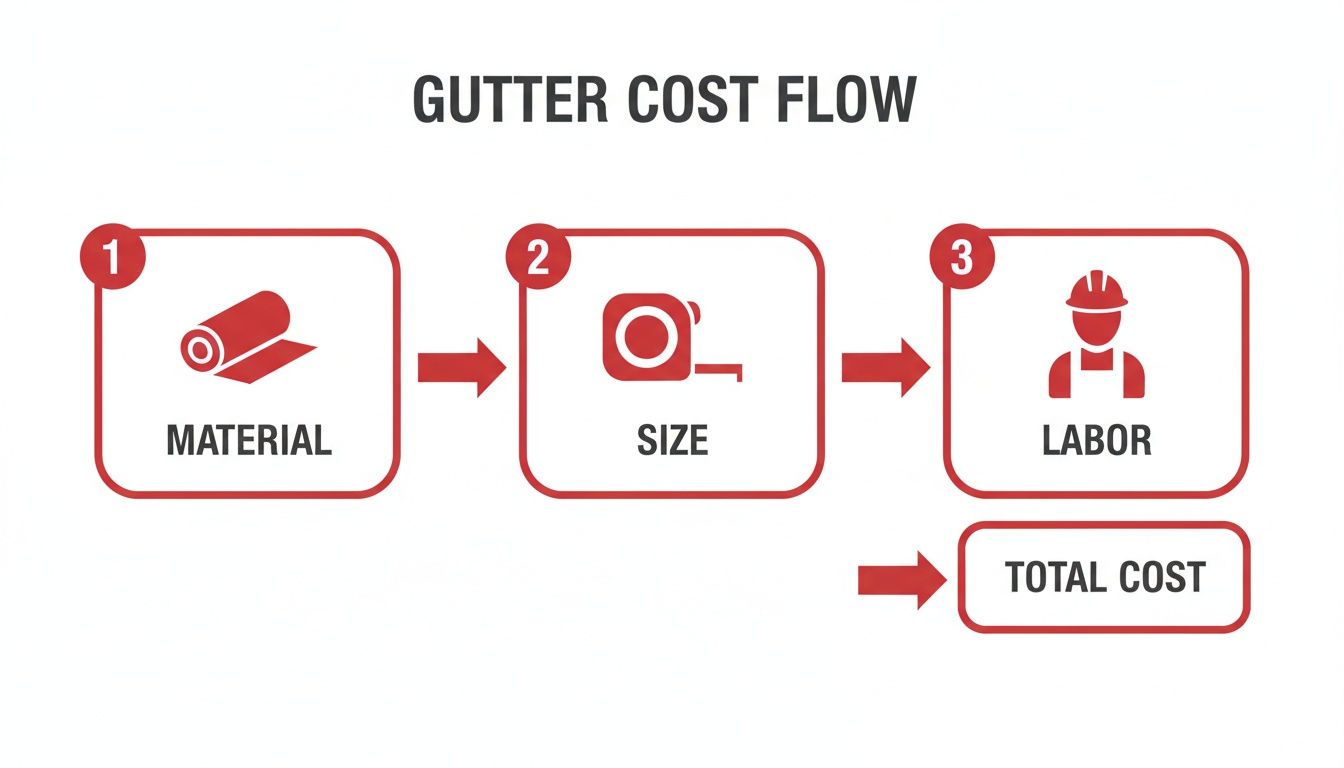
As you can see, it really comes down to three things: the material you choose, the size of your home, and the labor required to get the job done right.
Key Factors That Influence Your Gutter Quote
So, what exactly does a Dallas gutter contractor look at when putting together your estimate? Knowing what goes into the price will help you compare different quotes on an apples-to-apples basis.
- Total Linear Footage: This is the big one. We measure every foot of your roof's edge where a gutter is needed. More length means more material and more installation time.
- Material Choice: As we’ve covered, aluminum, steel, and copper come with very different price tags. Aluminum is the go-to for most homeowners, while steel and copper are a bigger upfront investment for their longevity and style.
- Number of Stories: Working on a two- or three-story home isn't just a matter of using a taller ladder. It involves extra safety precautions and more time to move equipment, which naturally bumps up the labor cost.
- Old Gutter Removal: If you have an old, failing system, we need to carefully remove and dispose of it. That extra step will be factored into the labor portion of your quote.
- Complexity of Your Roofline: A straightforward, rectangular roof is a much simpler job than a roof with lots of corners, gables, and varied angles. Each corner requires a precise custom cut and meticulous sealing, adding to the installation time.
Here in the DFW metroplex, our weather makes good gutters an absolute must, and local pricing reflects that reality. Based on 2026 figures, the average cost for a professional gutter installation in Dallas is between $634 and $1,508, with most homeowners landing right around $1,054.
This breaks down to a range of $5 to $30 per linear foot. That's a wide range because it depends so heavily on your material choice and the labor involved, which can run from $50 to $75 per hour.
Understanding Price Per Linear Foot
When you get an estimate, you'll almost always see the price broken down "per linear foot." This number is a convenient way to package the cost of the material and the labor to install it into a single figure. It's a great tool for comparing quotes, but be wary of any price that seems too good to be true.
A suspiciously low bid could be a red flag. It might mean the contractor is using thinner, lower-quality materials that will dent easily, or that their crew is inexperienced. A professional job prevents expensive problems like improper gutter pitch, which leads to standing water, leaks, and even foundation issues down the road.
Beyond the materials and labor, part of your investment is the peace of mind that comes from hiring a fully insured professional. Understanding what general liability insurance for roofing contractors covers shows you the kind of protection a reputable company provides for your property.
For a deeper dive into this metric, check out our guide on gutter installation cost per linear foot.
The only surefire way to know the cost for your home is to have a professional take a look. A free, no-obligation inspection from a local expert like Hail King Professionals will give you a precise, detailed quote tailored specifically to your home, so there are absolutely no surprises.
The Professional Gutter Installation Process Step by Step
So, you’ve hired a pro for your gutter installation in Dallas, TX. It can feel a little like a black box—you get a quote, pick a day, and then a crew shows up. But what really happens from the moment they pull up to the curb until you have a brand-new, fully functional gutter system?
Knowing the play-by-play gives you confidence in the work being done and a real appreciation for the craftsmanship involved.
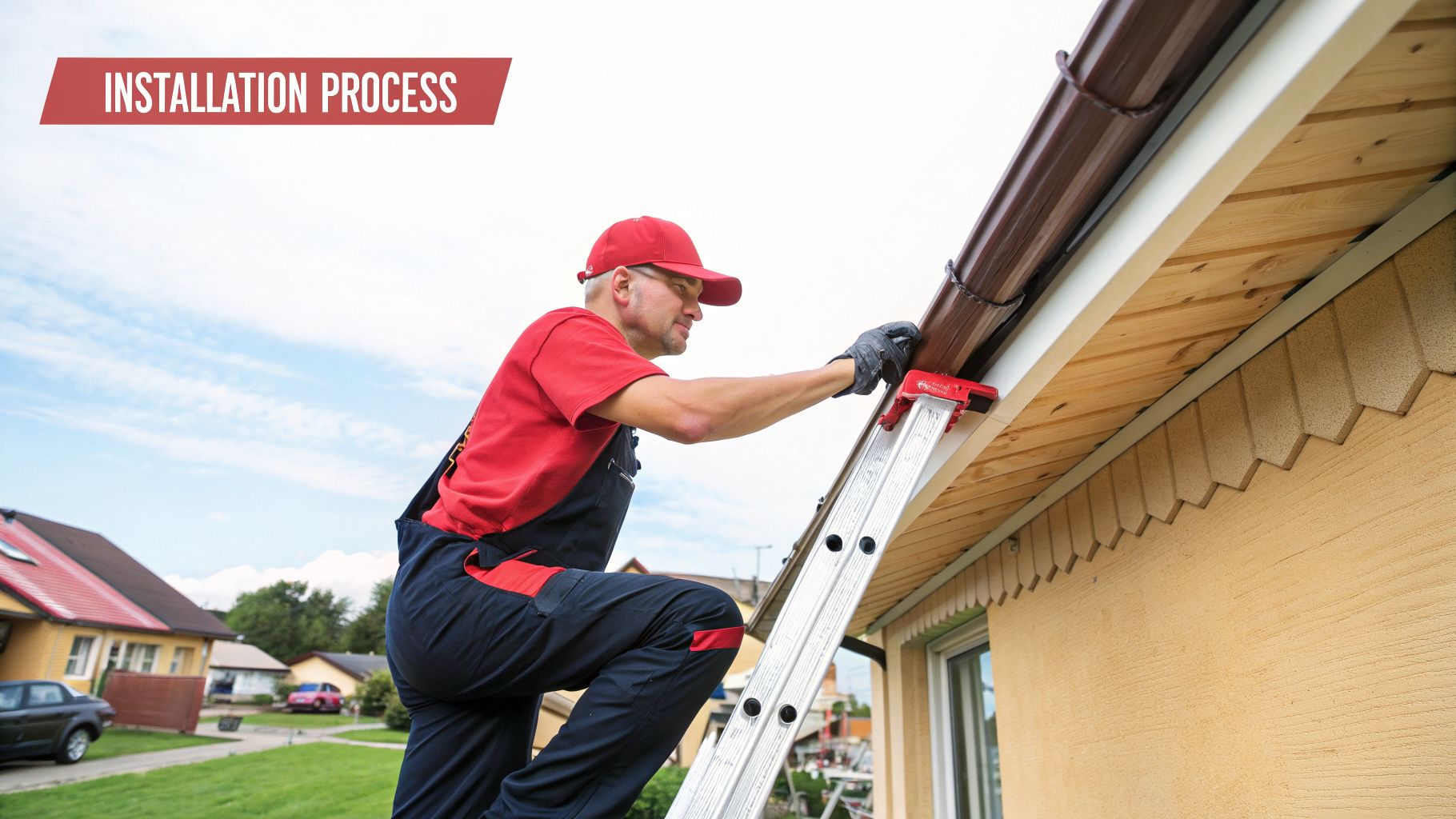
A proper installation is so much more than just slapping some metal onto your roofline. It’s a precise, multi-stage process that ensures your home is protected for decades. Think of it less like an off-the-shelf purchase and more like getting a custom-tailored suit for your house.
Step 1: Property Assessment and Precise Measurements
The first thing a professional crew does is a final walkthrough. They'll confirm the plan, double-check the linear footage, and scout out any tricky spots, like complex corners or steep roof pitches. This is also their last chance to finalize the perfect locations for each downspout to ensure water gets where it needs to go.
These measurements have to be dead-on. An error of just a few inches can compromise the entire system, so you’ll see the crew being incredibly meticulous. They aren’t just measuring for length; they're also carefully inspecting your fascia board—the wood trim where the gutters will be mounted. If they find any rot or damage, it has to be repaired before the new system goes up.
Step 2: On-Site Gutter Fabrication
This is where the real magic of seamless gutters happens. The crew doesn’t show up with a truck full of pre-cut gutter sections you’d find at a big-box store. Instead, they bring a specialized roll-forming machine that creates each gutter run right there in your driveway.
They feed a flat coil of your chosen material, usually aluminum or steel, into one end of this portable factory. The machine guides the metal through a series of rollers that expertly bend it into the classic K-style or half-round profile. Out comes a perfect, continuous gutter, cut to the exact length needed for that specific section of your roof.
This on-the-spot fabrication is what makes seamless gutters so superior. By creating one solid piece, you completely eliminate the joints and seams that are notorious for leaking in traditional sectional gutters.
The ability to form a 50-foot or 60-foot gutter in one continuous piece is the game-changer with professional installation. It creates a stronger, cleaner, and far more reliable system that dramatically reduces the potential for leaks and clogs down the road.
Step 3: Secure Fastening and Proper Pitching
With the gutters formed, the crew begins carefully attaching them to your home. They use high-quality hidden hangers that clip inside the gutter and are then screwed through the back, directly into the fascia board. This method is much stronger and gives a cleaner, more modern look compared to the old spike-and-ferrule systems you see on older homes.
But they don’t just hang them level—that’s a rookie mistake. This is arguably the most critical part of the job: setting the pitch. Gutters must be sloped ever so slightly toward the downspouts so that gravity does the work.
- The Golden Ratio: Pros aim for a slope of about one-quarter inch for every 10 feet of gutter. It’s subtle, but it makes all the difference.
- No Standing Water: An improper pitch leads to pooling water. That stagnant water adds weight, attracts mosquitos, and can eventually overflow right next to your foundation.
- Maximum Flow: Correct pitching ensures that even during a classic DFW torrential downpour, water moves swiftly and safely away from your home.
Step 4: Downspout and Elbow Installation
Finally, the crew connects the downspouts. They cut a precise hole in the bottom of the gutter, attach a drop outlet, and then secure the vertical downspout sections to your home's exterior with straps. Elbows are expertly fitted to navigate around eaves and other architectural features, directing the water flow exactly where it needs to go.
The job wraps up with a thorough cleanup, leaving your property looking even better than when they arrived. Now, your home is fully armed and ready for the next Texas storm.
Protecting Your Gutters From Hail and Clogs
So, your new gutter system is up and looking great. It's tempting to check that project off the list and forget about it, but the real work starts now: protecting that investment. Here in Dallas, long-term gutter care means getting ahead of two major headaches—stubborn clogs and damaging hail.
A little bit of consistent maintenance is all it takes to keep your gutters doing their job for decades, protecting your home from the kind of water damage we all dread.
Your Dallas Gutter Maintenance Checklist
North Texas weather is a character all its own, and it demands a specific game plan for gutter care. Our seasons throw different challenges our way, from thick pollen blankets to heavy leaf dumps.
- Late Spring (April-May): We all know about the oak trees in Dallas. They drop an incredible amount of pollen and tassels that turn into a thick, sludgy mess in your gutters. A thorough cleanout right after the main pollen drop is non-negotiable if you want to avoid clogs.
- Late Fall (November-December): Once those beautiful autumn leaves have finished falling, it's time for round two. Clearing out this layer of debris before the winter rains set in is key to preventing blockages and even ice dams if we get a cold snap.
- Post-Storm Inspection: After any serious hailstorm or high-wind event, take a quick walk around your house. From the safety of the ground, look for any obvious dents, sagging sections, or loose hangers.
The Power of Gutter Guards
Let's be honest, nobody enjoys spending their weekend teetering on a ladder. That's exactly why gutter guards are such a popular upgrade. These screens or covers fit right over your existing gutters, letting water flow in while keeping leaves, twigs, and other gunk out.
Think of them as a permanent filter for your home's water management system. They don’t make your gutters 100% maintenance-free—you might still need to brush off the top occasionally—but they dramatically cut down on how often you need a full-scale, mucky cleanout. It’s a huge time-saver and, more importantly, a major safety boost.
Clogged gutters are a leading cause of foundation problems and water seeping into your home. The Insurance Institute for Business & Home Safety points out that water damage is one of the most common insurance claims, and overflowing gutters are a huge reason why. By stopping clogs before they start, gutter guards are one of your best lines of defense.
Defending Against Dallas Hailstorms
Hail is just a fact of life in the DFW area, and your gutters are right in the line of fire. Choosing a tough material like heavy-gauge steel is your first smart move, but what you do after a storm is just as critical.
Once a hailstorm passes, it's vital to check your gutters for damage. Dents might just look like a cosmetic issue, but a hard enough impact can warp the gutter and create low spots where water just sits and stagnates. Worse, hail can crack vinyl gutters or even knock the whole system loose from its hangers.
Catching this kind of damage early means a simple repair can prevent a major leak down the road. If you need a hand, you can learn more about our professional gutter cleaning services in Dallas, Texas.
It's become common practice for top-rated Dallas installers to bundle gutter guards with a new installation. This is a direct response to our dense tree canopies and frequent storms. Based on data from ProMatcher, about 80% of services now bundle guards. While they add $7-$12 per foot to the upfront cost, the long-term savings in maintenance and potential damage repair are significant. You can find more details about Texas gutter costs on ProMatcher.com.
Common Questions About Gutter Installation in Dallas
It’s smart to ask a lot of questions before you invest in new gutters. A good contractor will have clear, straightforward answers ready for you, and getting them helps you feel confident you're making the right choice for your home.
Here are some of the questions we hear most often from homeowners thinking about a professional gutter installation in Dallas, TX. We’ll cover the essentials, from timelines to warranties, to help you get started.
How Long Does a Typical Gutter Installation Take?
This is one of the most common questions, and the answer is usually a pleasant surprise: for most single-story homes, a professional crew can get the entire job done in just one day. The real magic is that seamless gutters are made right there at your house. A truck with a special machine rolls out each section to the exact length needed.
If you have a larger two-story house or a particularly complex roof with lots of corners, it might stretch into a second day. But any experienced team will give you a solid timeline before they start so you know exactly what to expect and can plan accordingly.
The key to a one-day installation is preparation and experience. A professional crew arrives with all the right materials and their gutter-forming machine, which means no last-minute runs to the supplier and no delays.
What Kind of Warranty Should I Expect?
A warranty is your proof that a company stands behind its products and its work. When it comes to a gutter installation in Dallas, TX, you should always look for two separate warranties. Don't settle for just one.
- Material Warranty: This protection comes directly from the manufacturer of the aluminum or steel. It covers things like the finish peeling or cracking and should last for 20 years or more.
- Workmanship Warranty: This is the installer's guarantee on their own labor. It covers installation-related problems, like a leaky corner or a gutter that starts to sag. A trustworthy contractor will offer a workmanship warranty for at least one to five years.
Make sure you get the specifics of both warranties in writing as part of your contract.
Do I Need a Permit for Gutter Installation in Dallas?
For most homes in Dallas and the surrounding areas, the answer is no. You typically do not need a special permit to replace your gutters. The city generally views it as a standard part of home maintenance and repair.
The main exception is if your home is in a designated historic district. These areas often have specific rules to maintain the neighborhood's architectural look and feel. A good local contractor will already know about these requirements and can handle any extra steps for you.
How Much Does Gutter Installation Cost in Dallas?
The cost of gutter installation in Dallas reflects our area's unique challenges—namely, rapid growth and the constant threat of severe weather. This is why you see so many homes with durable steel and aluminum systems.
A 2026 analysis by Homeyou puts the average cost between $1,067 and $1,348 for a typical project of about 212 linear feet. Breaking that down, you're looking at roughly $901 for materials and $281 for labor, which comes out to an average of $6.14 per foot. You can dig deeper into local gutter pricing on Homeyou.com.
Ready to get a precise, no-surprise quote for your home? The team at Hail King Professionals provides free, detailed inspections to give you a clear understanding of your needs and costs. Contact us today to schedule your consultation and protect your home with a high-performance gutter system built to last. Learn more at https://hailkingpros.com.